You may have bought your first residential property, maybe even invested in more than one, and are looking for the next big project to sink your investment teeth into. Commercial property might just be the answer. What is commercial property investment? Commercial property is an opportunity for anyone looking to grow income and build wealth, outside of the buy-to-let strategy. This year sees the market being reinvigorated with improved yields and tenants rethinking workspaces and logistics, with new models shaping how investors gain exposure.
Commercial property differs from residential property in that it revolves around businesses and income-producing assets such as offices, retail hubs, and industrial warehouses. It takes some understanding and know-how, but commercial properties can yield higher rentals, have longer leases, and offer investors an attractive diversification option. While that all sounds glowing, it does have its downside too; it is complex, expensive, and requires larger capital injections, active management, and a sharper focus on lease structure and market cycles.
In this guide, we will cover “what is commercial property investment?”, explore the main asset types and how they perform, look at reward and risk, and discuss how you can access this class without the usual hands-on headache. We will look at an alternative to buying the building outright, too.
More topics can be read on the Gamma blog
What is commercial property investment? Understanding the basics
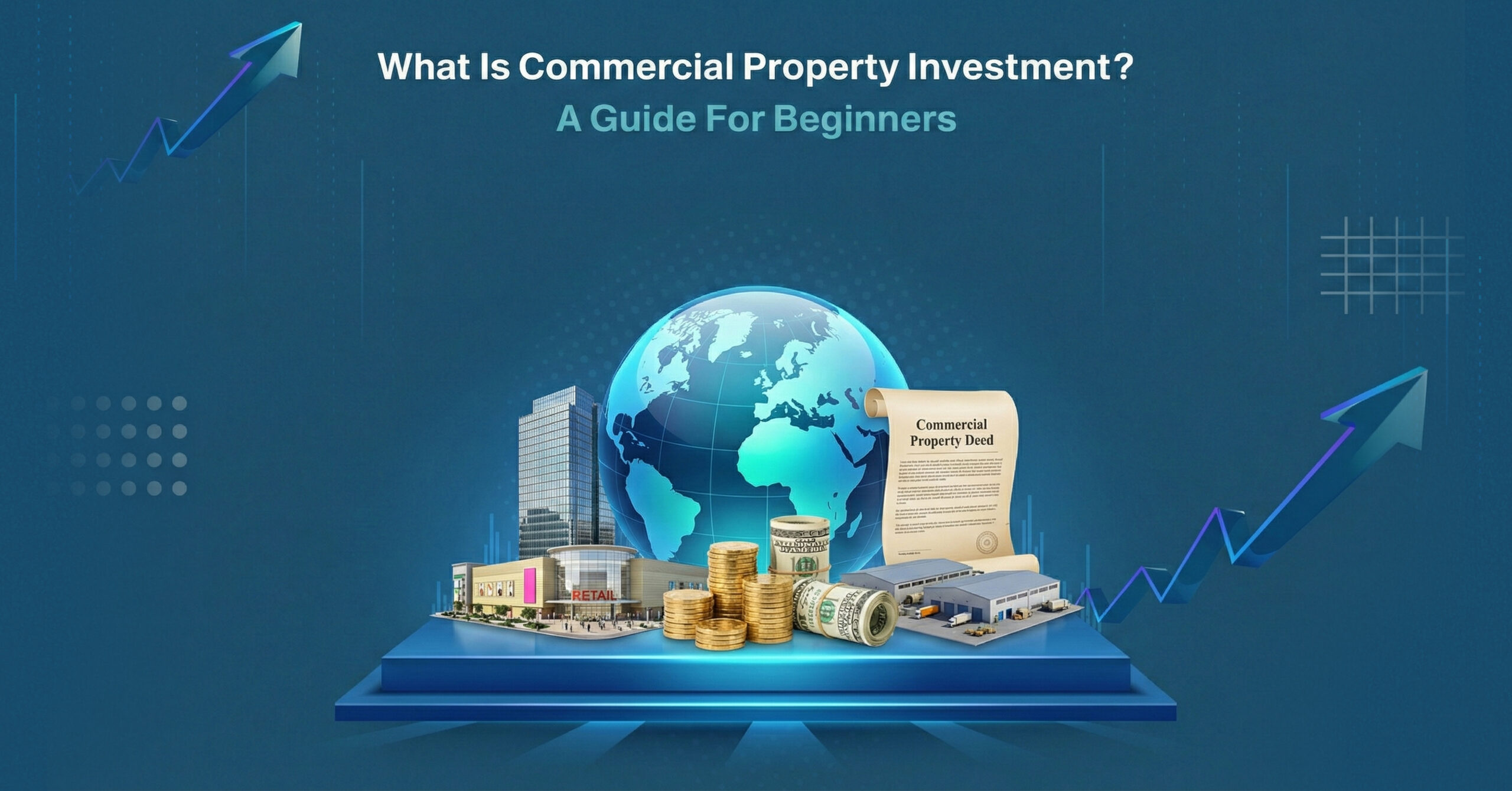
When asking, what is commercial property investment? You are referring to owning or even gaining exposure to properties that are leased to businesses rather than individuals. These spaces include office buildings, retail centers, warehouses, and logistical hubs, so commercial tenants will be companies, retailers, manufacturers, or service providers.
What makes commercial property so appealing is the three core features: longer leases (up to 3 years or more), potential for higher rental yields, and, finally, the ability to generate income that is less sensitive to individual tenant turnover. This makes commercial property compelling for many investors looking to diversify their real estate portfolios.
Post-pandemic, the commercial real estate market has shown signs of resilience worldwide, despite the disruption, especially in the retail and office segments. One industry report highlighted how cities are rebounding. Business districts are seeing the return of tenants to pre-
pandemic levels in major markets. With that said, in North America and Europe, new developments lag behind; this may lead to greater demand in the near future.
Looking at the MENA region, demand is increasing at a rapid rate. In the UAE and Saudi Arabia, for example, investors’ interest and leasing activity are rising, with one report stating that the central business hubs are reaching capacity. Logistics and industrial assets remain in strong demand globally and regionally, with growth driven by e-commerce sectors, supply-chain realignment, along with the need for modern infrastructure.
The overall lesson is the answer to the question: What is commercial property investment? We need to acknowledge that the asset class is changing. The traditional model of “buy a building, rent to a business, hold for decades” still works, but the new environment features new triggers, i.e., hybrid work, tech-enabled buildings, redevelopment of older stock, and divergent regional dynamics. Within the MENA region, especially, favorable policy returns, large infrastructure projects, and a strategic location are giving certain markets an advantage in an evolving landscape.
Types of Commercial Properties and Potential Returns

When exploring “what is a commercial property investment?”, it helps if we have a better understanding of the main types of commercial real estate and how they would differ in terms of tenants, lease structure, income potential, and risks. Each type of property appeals to different investor profiles, and the yields are likely to vary depending on the location, property quality, and market conditions.
| Property type | Typical Tenants | Ave. Lease Length | Potential returns | Key Advantages | Main Risks |
| Office Buildings | Corporations, SMEs, Startups | 3-10 years | 6-9% | Long-term tenants, prestige, predictable income | Sensitive to economic cycles; Hybrid work trends |
| Retail Spaces | Shops, restaurants, showrooms | 3-7 years | 5-8% | Visibility and foot traffic, consumer-driven | E-commerce competition, fluctuating consumer demand. |
| Industrial & Logistical | Warehouses, e-commerce, manufacturing | 5-15 years | 7-10% | High demand from e-commerce, low upkeep | Location sensitive, tenant concentration risk. |
| Mixed-Use Developments | A combination of retail, office, residential | varies | 5-9% | Diversified income streams, urban demand | Complex management, higher capital costs |
| Hospitality & Leisure | Hotels, serviced apartments | Short – medium term | 6-12% | Tourism-driven, high upside potential | Seasonal fluctuations, operational intensity |
This acts as a summary for the information that new investors looking into commercial real estate should know about the types of commercial real estate available, along with the potential returns they can expect.
On a global scale, industrial and logistics continue to outperform due to e-commerce growth and supply-chain modernization. Within the MENA region, hubs like Dubai and Riyadh are experiencing increased investor activity in office, retail, and industrial assets. One reason is likely due to the push from Vision 2030 and the government’s push to attract investors. The office sector is recovering a little more gradually after the pandemic, while mixed-use and industrial developments are attracting a lot of attention from income-focused investors.
An understanding of the types of properties available, their benefits, and risks is essential when asking what is commercial property investment. The choice is ultimately up to you and what works best for your portfolio, needs, goals, management level, and risk tolerance.
Pros and Cons of Investing in Commercial Property
When learning what commercial property investment is, it is important to do so without rose-tinted glasses and look at the cons alongside the pros. Understanding the pros and cons of commercial property is key for any investor asking what is commercial property investment. While the potential returns are attractive, they usually come with the need to be carefully managed.
Pros
- Higher rental yields: Commercial property often offers better income than residential assets, particularly industrial and logistics properties.
- Long-term leases: Contracts or leases can span 3 to 15 years, providing predictable cash flow.
- Diversification: Adding commercial real estate to a portfolio can reduce overall risk by balancing other asset classes.
- Capital appreciation: Well-located properties in growth markets can increase in value over time.
Cons
-
- High initial investment: Commercial real estate requires more startup capital than residential properties.
- Market sensitivity: Office and retail sectors can fluctuate with economic cycles, consumer trends, or regional policy changes.
- Management complexity: Tenancy agreements, maintenance, and regulatory compliance can be time-intensive.
- Vacancy risk: Long-term leases are beneficial, but if a tenant defaults or leaves, the gap can impact the outcome.
For investors in the MENA region, the advantages and drawbacks are consistent; the pace of recovery and specific yields are likely to vary from country to country. Logistics and industrial assets in Saudi Arabia and the UAE have outperformed due to e-commerce growth, while some office spaces are still figuring out hybrid work trends.
How to Manage Risks in Commercial Property Investment

Strategies in managing risk is a wise more for even the most experienced investors. Effective risk management is central to answering what is commercial property investment responsibly.
Key strategies include:
-
- Due diligence: Assessing tenant creditworthiness, property condition, and local market dynamics before investing.
- Diversification: Spread investments across multiple sectors, regions, and property types to reduce exposure
- Professional management: Making use of property managers ensures maintenance, tenant relations, and compliance are handled efficiently.
- Lease structuring: Negotiating strong lease terms, including rent escalation and exit clauses, protects cash flow.
- Regulatory awareness: Understanding local laws, taxes, and zoning requirements is essential, particularly in the MENA region, where regulations vary by country.
Property investment looks a little different today; there are alternative options to earning out right. Real estate investment trusts (REITs), funds, and tokenized platforms allow investors to get involved with minimal effort and without direct management. These types of options are a great solution in relevant markets like Saudi Arabia and the UAE, where fractional investment opportunities are expanding rapidly.
When investors combine careful selection, diversification, and property support, investors can manage the challenges of commercial property while enjoying the potential long-term rewards.
How Gamma Assets offers a simpler way to invest in real estate-backed assets
Many investors who are learning “what is commercial property investment?” face the biggest challenge is accessibility. Traditional commercial real estate investment requires high capital from the investor and ongoing management, and a solid understanding of the local markets. Gamma Assets provides a revolutionary alternative to real estate through tokenization, which includes exposure to commercial and mixed-use properties.
Through fractional ownership, investors can start with as little as 500 SAR, gaining access to income-generating projects such as hotels, clinics, and residential developments. Each property is registered on the blockchain, ensuring that all transactions are transparent and secure. This allows the ease and flexibility of a flexible digital platform to be combined with the stability and security of real-world assets.
In the MENA region, the interest in tokenized real estate is growing, and Gamma Assets is the link between traditional property and the future of digital finance. Investors can diversify their portfolios with ease without the burden of property management.
You can start investing now from the Gamma Asset Investment Platform
So, what is commercial property investment? It is the process of owning or funding properties to be used by businesses, including offices, retail spaces, industrial facilities, or mixed-use developments, where you will earn income through rentals and potential long-term gains.
Commercial investment can be complicated and require a lot of capital to get started, but it can also offer strong returns. Platforms like Gamma Assets are a practical solution for investors as they offer exposure to commercial property with lower entry barriers and less management responsibility.
Whether you are a novice or experienced investor, understanding the fundamentals of commercial property and exploring innovative options like Gamma Assets can assist you in building a more resilient, diversified portfolio that suits your financial needs and risk tolerance.
FAQ
How is commercial property different from residential property investment?
Residential property is rented to individuals, whereas commercial property is leased to businesses such as offices, retailers, or industrial tenants. Commercial leases are usually longer and can offer higher, steadier returns. When asking “what is commercial property investment?” think of it as owning income-generating spaces used for business rather than living.
What are the main risks of investing in commercial property?
The main risks include market downturns, vacancies, and higher maintenance costs. Returns can fluctuate with economic conditions and tenant stability. Anyone exploring commercial property investment should consider diversification and professional management to reduce these risks.
Can beginners invest in commercial property without buying a building?
Yes. You can invest through REITs, real estate funds, or tokenized platforms that allow fractional ownership. For those learning what commercial property investment is, and wanting a simpler option, Gamma Assets offers access to residential real estate without having to manage the properties personally.