Real estate has long been heralded as one of the safest ways to build wealth. That may not always be the case, and for every success story, there are others who insist on explaining why real estate is a bad investment. The truth is, both perspectives can be valid. Some investors see property as a safe bet, as it represents stability, long-term growth, and tangible value. Others may have a different view, seeing it as a slow-moving asset that ties up capital, carrying hidden costs, and demanding constant attention and upkeep. Market fluctuations, economic downturns, and management hassles often contradict the notion that property always appreciates.
An understanding of why real estate is a bad investment depends on context, which includes your personal goals, timing, and how you choose to invest. There are genuine challenges facing the traditional method of buying and managing property. These challenges can be eliminated with new digital and tokenized models that are changing the way we see and invest in real estate.
In this article, we will unpack the main reasons real estate may sometimes earn its label “bad investment.” We intend to separate myth from reality and explore the more modern alternative. Gamma Assets is redefining what property investment can look like.
More topics can be read on the Gamma blog
Why Real Estate is a Bad Investment: Understanding the Argument
To understand why real estate is a bad investment for some investors, we need to have a look at the practical challenges that come with traditional property ownership. It may sound simple, “hold” or “sell,” but the reality can be far more nuanced and expensive.
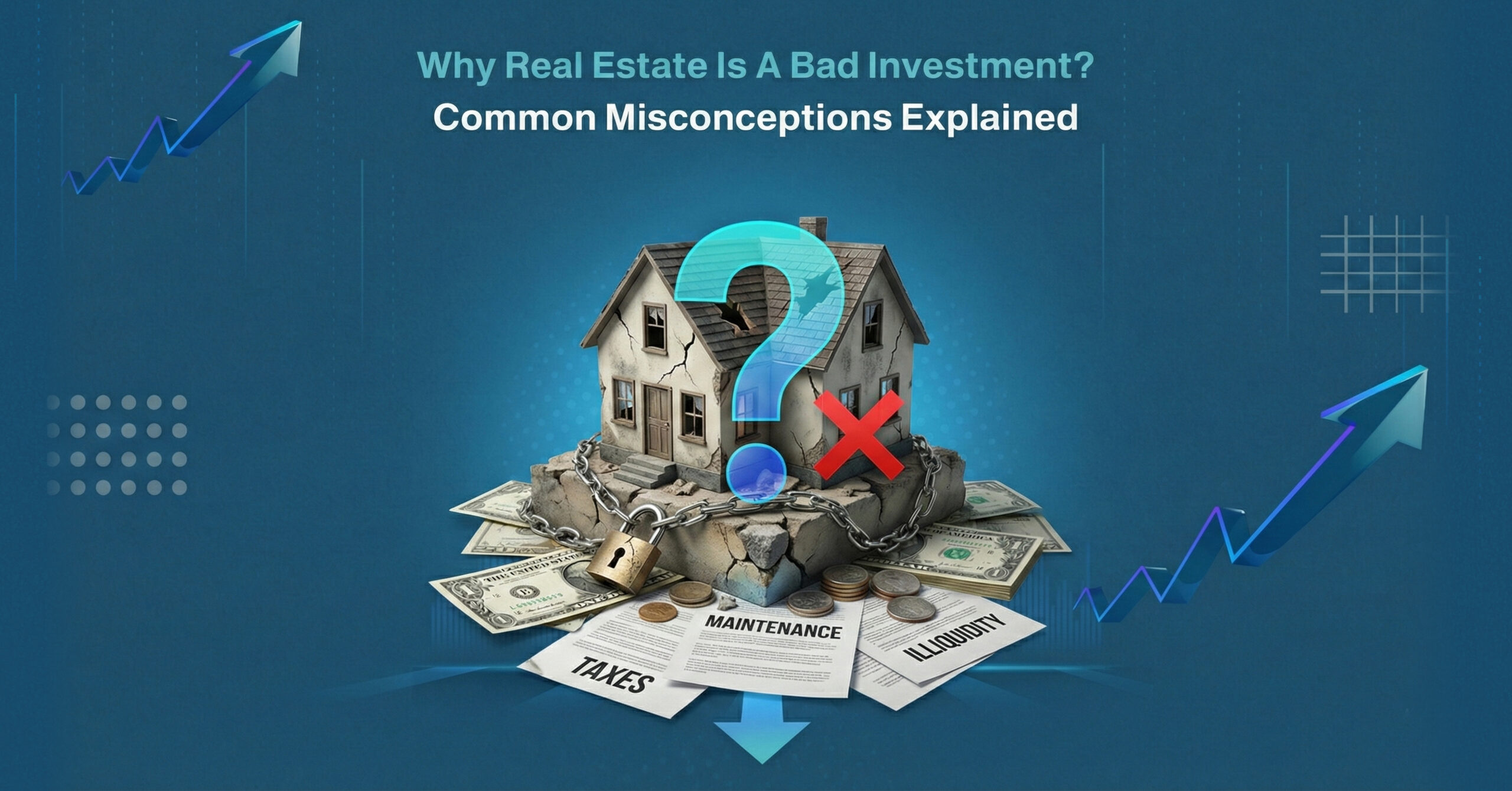
- High upfront costs: Buying a property requires a large amount of capital upfront. Even if you have a mortgage, there are still hidden fees, taxes, and duties to be considered; all of these may drain your reserved capital before you start seeing any return.
- Illiquidity: Buying and selling property takes time; selling quickly because you need the cash will lead to selling below market value, and even then can take months or longer if the market is weak. This lack of liquidity is one of the main reasons some investors feel real estate is a bad investment when compared to other, more flexible alternatives.
- Maintenance and management: A leaky tap, a paint job, a new roof, owning property means you are responsible for repairs, tenants, and unexpected expenses. So what may begin as “passive income” can rather quickly become active and expensive work.
- Market risk: Property values are dependent on location, timing, and economic trends. Interest rate hikes or oversupply can easily erode profits.
This is not to say that real estate cannot be profitable, but it explains why many investors grow frustrated with the limitations and why they may be seeking modern alternatives.
The Main Drawbacks of Traditional Real Estate Investing
Real estate is a bad investment; is rather a dramatic statement, but it is how some investors feel through sheer frustration. While property can certainly be profitable, investors can have their profits eroded by unrealistic expectations or by not understanding the hidden costs.
Markets are cyclical, so with many investors assuming that property values will rise or that rental income will always cover expenses, many investors will face disappointment. If a property is bought during a boom, it may take years to recover its value when the market cools. Underestimating the running costs is another fatal error, as maintenance costs, taxes, and insurance can all eat into your returns. It is for these reasons that some investors are convinced that real estate is a bad investment, even when the issues lie in poor timing or poor planning.
While we have focused on the negatives, real estate does have unique strengths; it is tangible, often stable over the long term, and historically a good hedge against inflation. This means that the problem doesn’t lie in the asset itself but in how the asset is managed and financed. Success in real estate depends on three core elements: smart location, long-term commitment, and the ability to handle short-term volatility.
It is important to note that real estate as an investment asset isn’t inherently good or bad; it is a tool that investors can use to build wealth and strengthen portfolios. When the asset is misunderstood or poorly managed, it can quickly become a financial burden. It is for this reason that investment platforms are gaining notoriety by changing the way investors access real estate and helping them avoid common pitfalls.
Comparing Real Estate to Other Investment Options

We can debate why real estate is a bad investment; first, we need to look at how it performs next to other common asset classes. Through a comparison, we can see the frustrations investors may experience, such as limited liquidity, high costs, and hands-on management.
| Factor | Traditional Real Estate | Stock/ ETFs | Bonds | Tokenized Real Estate |
| Liquidity | Low- properties take time to sell. | High- easy to buy or sell | High | High- digital and fractional trading |
| Typical Returns | Moderate, long-term | Variable, often short-term gains | Low to moderate | Competitive, backed by real estate. |
| Risks & Volatility | Market-dependent; tied to the local economy | High volatility | Low | Moderate; diversified exposure |
| Management Required | High- Upkeep tenants, and legal | Low | None | None; professionally managed |
| Accessibility | Limited- large capital needed | High- small amounts possible | High | High; low entry costs and global access. |
Flexibility and liquidity seem to be the two largest areas where traditional property ownership is lagging; these are the two areas that modern investors prioritize. On the other hand, stocks and ETFs allow quick entry and exit but come with daily market swings. Bonds offer stability but have limited growth potential.
This is where the new real estate models bridge the gap. Tokenized real estate platforms are able to combine the stability of property with the ease and convenience of digital investing. For investors who have wondered why real estate is a bad investment, these models show that the problem isn’t real estate itself but rather the old structure of owning property and managing it.
How Gamma Assets solves the common challenges of property investing

For the investors with firsthand experience of “why real estate is a bad investment,” the issue usually isn’t the asset itself but rather the barriers around it. Traditional ownership demands high capital, hands-on management, and long holding periods. Gamma Assets was built to remove those limitations while still keeping the tangible strength of property as an investment base.
Gamma Assets makes use of tokenization and allows investors to own digital fractions of high-quality properties. The Gamma Assets approach reduces the entry costs, increases liquidity, and eliminates the need for management. Investors can buy and sell property-backed tokens through the dashboard, either in the app or through the website, like they would with any digital asset, while gaining exposure to the same value growth and rental returns, just without the complexity.
The model is centered around transparency and accessibility. Each token is linked to a real income-generating asset and recorded on the blockchain for both security and verification. There are no hidden fees, no waiting months for transfers and exits, and no surprise maintenance bills.
Hearing that real estate is a bad investment usually comes from investors who have had liquidity issues or management hassles. Gamma Assets strives to remove those challenges through technology, turning weaknesses into advantages through the easy-to-use platform, therefore making property investment simpler, faster, and open to everyone.
You can start investing now from the Gamma Asset Investment Platform
In the debate around why real estate is a bad investment, the issue isn’t whether or not the property has value, but rather whether the traditional method of investing still makes sense. The high costs, management headaches, illiquidity, and market pressures can make owning an investment property a challenge for individual investors.
Innovation and technology are reshaping the way we invest in the property market. Tokenized platforms like Gamma Assets keep the benefits of owning real estate without the headache of direct ownership, once again making it appealing to investors. Gamma Asset brings stability, income, and tangible value to the table while getting rid of many of the old barriers.
Real Estate isn’t a bad investment; it’s an evolving one. The key is choosing structures that off flexibility, transparency, and accessibility. For that reason, the question isn’t “why real estate is a bad investment?” but rather why invest in the traditional method at all?
FAQ
Why do some people say real estate is a bad investment?
Many people see real estate as a bad investment because it demands large upfront costs, ongoing maintenance, and time. Returns can shrink once taxes and fees are considered, and selling a property often takes months. These factors explain why real estate is a bad investment for some investors, especially those seeking flexibility or quick returns.
Is real estate riskier than other asset classes?
Real estate can be riskier than it appears. Property values depend on local markets, interest rates, and demand, so downturns can reduce both income and resale value. Compared to liquid assets like stocks or bonds, this volatility can make investors question why real estate is a bad investment in uncertain times.
Can real estate still be profitable with modern investment models?
Yes. New approaches, such as tokenized real estate, reduce many traditional drawbacks. Through platforms like Gamma Assets, investors can own fractions of property with lower costs, easier access, and more liquidity. These innovations challenge the idea of why real estate is a bad investment by keeping the benefits without the burdens of direct ownership.