Property investment is an appealing option for many people because it offers investors the chance to build long-term income and grow wealth through a physical asset. A common place to start is by asking the question, “How much can I borrow for an investment property?” and the answer isn’t as straightforward as one may think. Borrowing limits are determined by several factors, such as income, financial history, the type of property you want to buy, and how comfortable a lender feels with the level of risk.
It is important to understand how banks calculate borrowing capacity to ensure you have all the information needed to include in your planning for any real estate purchase. The borrowing capacity will affect the size deposit you will need and the type of loan you qualify for. This will help you factor in whether the investment will be affordable in the long run. While many first-time buyers focus on the property itself, the loan structure and repayment are just as important.
In this guide, we will cover the main factors that affect the borrowing limits, how deposits and repayment terms work, the risks of taking more than you can manage, and easier ways to invest in property without using a large mortgage. By the end of this article, the hope is that you have a clear idea of what influences your borrowing power and how to make responsible decisions.
More topics can be read on the Gamma blog
How Much Can I Borrow for Investment Property? The Basics Explained
When it is asked, “How much can I borrow for an investment property?”, they are actually asking how lenders judge affordability. There is no single set amount for every investor; instead, the banks will look at your complete financial picture to estimate what you can comfortably repay without putting yourself under unnecessary pressure. This is known as borrowing capacity, which is the starting point for any investment loan discussion.
Borrowing for an investment property also works differently from borrowing for a home you plan to inhabit. Banks see investment properties as higher-risk. This is due to the capricious nature of rental income and the changing property value. This is why lenders will often apply stricter checks with more conservative limits. This ensures you can handle the repayments even in slower rental periods or during interest rate hikes.
Let’s say, for example, that you earn a steady salary, have minimal debts, and have maintained a good credit score. The bank might offer a higher loan amount because your finances show stability. If you already have other loans and your expenses are high, the amount the bank offers will be reduced because your repayment capacity has dropped. The same would apply when the interest rate rises, as higher repayment rates shrink the amount you can borrow.
All these elements come together to answer “how much can I borrow for investment property?” We will take a look at the key factors affecting how much you can borrow next.
Key Factors that Affect How Much You Can Borrow

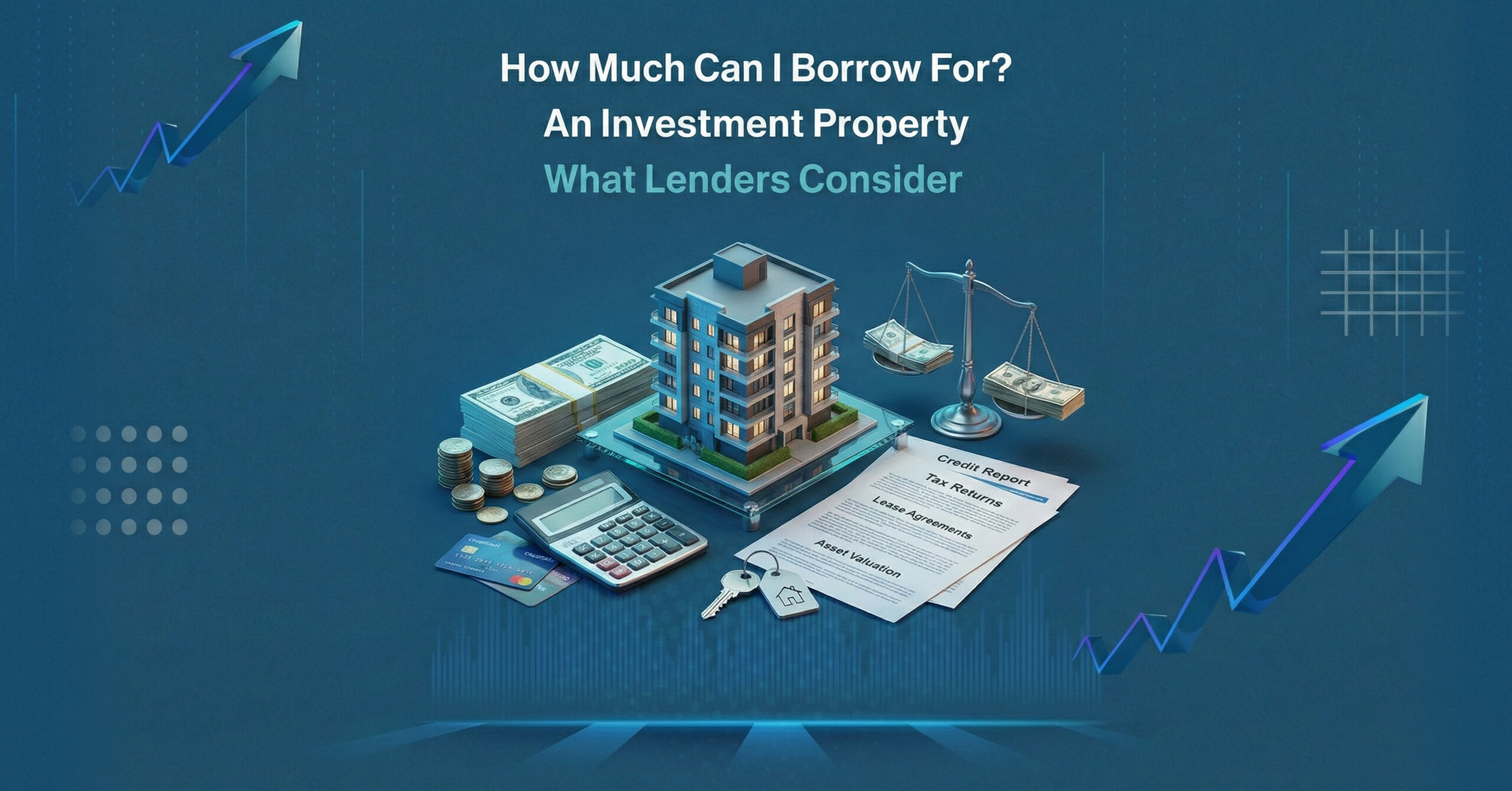
When banks and lenders calculate “how much can I borrow for investment property?” They look at a group of financial checks that help them figure out risk and affordability. We have included a table that covers the main factors they assess, along with how each one can raise or reduce your borrowing capacity.
| Factor | What Lenders Assess | How it Increases Borrowing | How it Reduces Borrowing |
| Income Stability | Salary, business income, contract length, proof of earnings | Consistent long-term income shows reliability and supports a higher loan amount | Irregular income, short-term contracts, or limited documentation lower borrowing potential |
| Monthly Expenses | Living costs, dependents, subscriptions, lifestyle spending | Lower expenses leave more free income for repayments | High monthly expenses reduce repayment capacity and shrink the loan amount |
| Credit Score & History | Repayment behavior, missed payments, and credit utilisation | Strong credit history signals low risk and may unlock better rates | Poor score or past missed payments cause lenders to limit the loan size or decline applications |
| Existing Debt | Car finance, credit cards, personal loans, and previous mortgages | Low or no debt increases available income and boosts borrowing power | Multiple loans or high balances raise your debt-to-income ratio and cut borrowing sharply |
| Debt-to-Income Ratio (DTI) | Percentage of income already committed to debt | A low DTI shows a healthy financial balance and supports higher borrowing | A high DTI suggests financial strain and forces lenders to offer smaller loans |
| Investment rate Environment | Current and forecasted market rate | Lower rates reduce repayment amounts, increasing borrowing capacity | Higher rates push repayments up, which lowers the amount lenders approve |
| Property Type | Location, property age, off-plan vs ready, rental demand | Stable, high-demand areas are seen as safer investments | Off-plan units, volatile locations, or short-term rental markets may be classed as higher-risk |
Simply put, high income, a clean credit record, and minimal debt help you qualify for a higher loan. Higher expenses, risky property types, and rising interest rates push your borrowing limit down. All these factors work together to answer the question “How much can I borrow for investment property?” That is why it is so important to understand how lenders evaluate each one.
Understanding Deposits, Loan-to-Value Ratios, and Repayment Terms
A large part of answering the question “How much can I borrow for investment property?” is understanding how deposits and loan-to-value ratios shape the size of the loan. A larger deposit is often required for investment properties rather than for a home loan. The reason for this is to try to reduce the lender’s risk and improve the chances for approval. It will lower the monthly repayments as the loan amount is smaller too.
Loan-to-value ratio (LTV) compares the size of the loan to the value of the property. A lower LTV usually leads to better interest rates and more flexible terms. A higher LTV signals a higher risk to the lenders and will therefore limit the total amount you can borrow. Repayment structures are also important. Fixed terms offer a more stable repayment, while variable rates will rise and fall with market conditions. Knowledge of how these elements work together makes it easier to plan a realistic budget and avoid borrowing more than you can repay comfortably.
Risks of Over-Borrowing and How to Protect Your Investment
A loan for an investment property may assist you in building long-term wealth. Taking on too much debt creates avoidable pressure. When potential investors ask, “How much can I borrow for investment property?” The real question should be “How much can I repay without adding stress?” Over-leveraging becomes a problem when repayments take up too much of your income or when rising interest rates make the loan and repayments harder to manage.
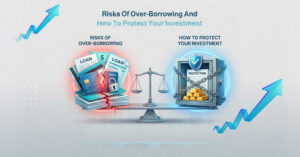
We need to consider several risks. First, rental income may fall during vacancy periods, property values can drop, and unexpected maintenance costs can appear at any time. If your finances are already stretched, such changes may make managing your loan a lot more difficult. To protect yourself, you can run a “stress test.” To do this, use a bond/ mortgage calculator and increase the interest rates to see if the loan would still be affordable. We would also suggest that you keep a small emergency fund to help bridge any slow rent months. This will help us answer the question: “How much can I borrow for an Investment Property?”
How Gamma Assets Offers a Low-Entry Alternative to Property Financing
Some investors are eager to enter the property market but do not want to take out a large loan. Some investors who ask “how much can I borrow for an investment property?” are simply assuming that a loan is the only option. Gamma Asset offers investors a unique alternative for investors who prefer a lower-risk entry point.
Gamma Assets allows you to invest in real estate-backed opportunities without the need for a mortgage, deposit, or complex approval. Instead of committing to a single property and long-term repayments, you can buy into fractional assets with a minimal entry amount as little as 500 SAR. Making it easier to diversify your portfolio and gain exposure to real estate without the financial pressure of loan obligations or maintenance costs. For new investors or anyone looking to avoid large loans and debt, this approach could be the answer as it provides a more flexible method of participation in the real estate market and mitigates financial risk.
Understanding how much I can borrow for an investment property starts with knowing how lenders or banks assess income, debt, credit history, and property risk. These elements will affect your loan limits and help judge whether a traditional investment property is in the cards for you. Borrowing responsibly is vital as the long-term goal is growth, not taking on more pressure than necessary.
You can start investing now from the Gamma Asset Investment Platform
If the idea of loans and mortgages makes your blood run cold, getting into the property markets with a platform like Gamma Assets has never been easier, with minimal upfront costs and no long-term debt. This makes it possible for anyone to get involved and grow a portfolio while managing financial risk. With all said and done, you sh how much can I borrow for an investment property, should be answered.
FAQ Regarding How Much Can I Borrow for an Investment Property
How do banks decide how much you can borrow for an investment property?
Banks will consider your income, monthly expenses, and any existing loans to work out what you can realistically afford to repay. They will also check your credit score to see how reliably you’ve managed debt in the past. Another factor is the type of property you want to buy, since lenders see some investments as higher risk than others. All of this helps them calculate a safe borrowing limit that protects both you and the bank.
Do you need a higher deposit for investment property loans?
In most cases, yes. Lenders often ask for a larger deposit on an investment property compared to a home you plan to live in. This is because investment properties carry more risk, especially if rental income changes or the market slows down. A higher deposit lowers the loan-to-value ratio, which can help you secure better interest rates and reduce your monthly payments.
Are there investment options that don’t require borrowing?
Yes. If you want real estate exposure without taking out a mortgage to do so, you can look at alternatives like real estate funds or tokenized property platforms. These allow you to invest smaller amounts without the long-term commitment and risk of a full property loan. This approach is useful for anyone who wants to avoid large debt or who prefers a more flexible way to enter the real estate market.