Digital assets and Physical assets are splitting the investment landscape. For many investors, understanding digital assets vs physical assets has become increasingly important as technology is steadily shaping how value is stored, transferred, and accessed. Comparing these two asset types is not as straightforward as one may assume. Differing ownership models, market behavior in cycles, and distinct risks and rewards illustrate these differences rather clearly.
For investors seeking flexibility, speed, and innovation, digital assets are more appealing. If investors are seeking assets associated with tangibility, stability, and long-term value preservation, then physical assets may be a more suitable option. In a diversified portfolio, both physical and digital assets have their place when both are understood.
In this article, we will explain digital assets vs physical assets in practical investment terms. By the end, you should have a clear understanding of what qualifies as each asset type, how ownership and liquidity differ, how risks and valuation compare, and how income potential varies. The article will also explore how platforms such as Gamma Assets help bridge digital access with real-world physical property value.
More topics can be read on the Gamma blog
Digital Assets vs Physical Assets: What the Difference Really Means
Essentially, the distinction between digital assets vs physical assets lies in form, access, and representation of value.
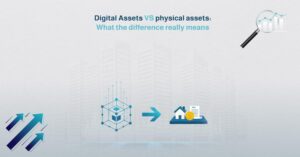
Digital assets are those that exist or are managed digitally, such as cryptocurrencies, tokenized assets, digital securities, and other investments accessed through online platforms or blockchain-based systems. The value of such assets is usually recorded electronically, transferred digitally, and accessed through virtual wallets or investment platforms.
Physical assets are tangible assets with a physical presence, such as real estate, land, commodities such as gold, and other hard assets. Ownership is usually recorded through registries, deeds, or custodians, with value tied to scarcity, utility, and long-term demand.
It is important to note that digital doesn’t always mean intangible value, and physical doesn’t always mean direct control. A digital token may represent ownership or exposure to a fraction of a tangible asset, inversely a physical asset may be accessed indirectly through financial or legal structures. Understanding digital assets vs physical assets, therefore, requires looking beyond the assigned labels and rather focusing on how value is created, stored, and protected.
Ownership, Control, and Custody in Digital Assets vs Physical Assets
When it comes to digital assets vs physical assets, ownership is one of the most misunderstood aspects.
Physical assets usually have ownership established through legal documentation such as title deeds or certificates. Control is enforced through legal systems, and custody may involve third parties such as registries, banks, or custodial services. While this system may be well established, it still involves slow transfers, complex paperwork, and jurisdictional limitations.
Digital assets represent ownership differently. Access is often tied to digital credentials, biometrics, digital wallets, or platform accounts. Control can be immediate and global, but this also introduces new risks, which we did not have with physical assets. Losing access credentials or relying on poorly structured platforms can compromise ownership rights. Legal recognition varies depending on jurisdiction and asset type.
In both cases, custody is a crucial factor. Physical assets face risks such as damage, maintenance, theft, and legal disputes. Digital assets face risks related to cybersecurity, platform reliability, and regulatory clarity. When comparing digital assets vs physical assets, it is vital that you understand who controls the asset, how ownership is enforced, and what happens if access is lost.
Liquidity, volatility, and valuation in digital assets vs physical assets
We will look at a direct comparison, as liquidity, volatility, and valuation are key decision points for most investors evaluating digital assets vs physical assets.
Liquidity, volatility, and valuation compared
| Comparison Factor | Digital Assets | Physical Assets |
| Liquidity | Often high, with faster buying and selling depending on platform access | Generally lower, with longer transaction and settlement periods |
| Time to Convert to Cash | Minutes to days in many cases | Weeks to months, sometimes longer |
| Market Volatility | Can experience sharp, short-term price swings | Typically, more stable with gradual price movements |
| Price Discovery | Continuous, market-driven pricing. | Periodic valuation through appraisals and comparable sales. |
| Valuation Transparency | High visibility but sensitive to sentiment | More opaque but grounded in physical characteristics |
| Impact of Market Sentiment | Immediate and pronounced | Slower and often delayed |
One of the clearest differences between digital assets vs physical assets. Digital markets allow faster entry and exit, while physical assets trade less frequently but with more stability. Digital markets tend to have higher volatility, whereas physical assets usually reflect longer-term economic trends. Investors use these trends to balance risk, timing, and portfolio diversity and flexibility.
Income generation and long-term value comparison
Income potential plays a major role when evaluating digital assets vs physical assets.
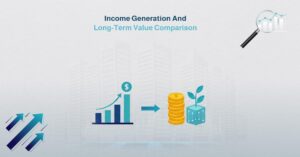
Yield distributions, platform-based returns, or participation incentives are the mechanisms through which digital assets may generate income. Such income, while flexible, can be subject to market fluctuations, platform performance, or regulatory changes.
Physical assets differ as they derive income through rental yields, leasing arrangements, or productive use. Since physical assets are tied to real-world demand, they are often more predictable but can be slower to realize. For this reason, they are commonly viewed as long-term stores of value, particularly in inflationary environments.
Long-term investors interested in preservation will often combine both digital assets and physical assets to balance growth potential with stability. Digital assets offer innovation and accessibility while physical assets emphasize durability and real-world utility.
How Gamma Assets connects digital access to physical property value
Gamma Assets offers investors a structured approach that helps address some of the difficulties associated with digital assets vs physical assets by combining elements of both.
Gamma Assets, through its digital infrastructure, enables its investors to access real-world property while maintaining a clear connection to physical asset value. Property-backed structures provide transparency, while digital access simplifies participation and portfolio management. This approach allows investors to benefit from physical real estate fundamentals without the traditional barriers of direct ownership.
Gamma Assets creates a bridge between innovation and stability by linking digital access with tangible property value. Investors can participate in property markets through a modern, structured model that aligns digital efficiency with physical asset backing.
You can start investing now from the Gamma Asset Investment Platform
Understanding digital assets vs physical assets is important for any investor navigating today’s evolving markets. Digital assets offer liquidity, accessibility, and innovation, while physical assets provide stability, income potential, and long-term value preservation. Each comes with its own risks, valuation methods, and ownership structures.
Rather than choosing one type over another, they should be viewed in conjunction, forming part of a balanced and diversified portfolio; digital assets vs physical assets will serve different roles. By weighing liquidity, volatility, income, and control, investors can make informed decisions that align with their goals, risk tolerance, and time horizons.
FAQ
Are digital assets riskier than physical assets?
Digital assets are often perceived as riskier as they can experience higher price volatility and faster market swings. However, risk is not determined by format alone. Digital asset risk depends on factors such as platform structure, regulatory oversight, cyber security, and how ownership is recorded and protected. Physical assets also carry risks including illiquidity, legal disputes, maintenance costs, and exposure to local economic conditions. When comparing digital assets vs physical assets, the key difference is how risks present themselves rather than how severe the risks are. Both require due diligence, clear ownership structures, and an understanding of how value may change over time.
Do physical assets offer better long-term protection than digital assets?
Physical assets are often associated with long-term value preservation because they are tied to real-world use and scarcity. Property and commodities, for example, may provide some protection against inflation and economic uncertainty. However, long-term performance depends on factors such as location, demand, regulatory changes, and ongoing costs. Digital assets may lack physical presence but can still support long-term strategies when they are backed by real assets or structured through regulated platforms such as Gamma Assets. In the context of digital assets vs physical assets, long-term protection is less about asset type and more about how the asset is managed and integrated into a broader investment plan.
Can investors combine digital assets vs physical assets in one portfolio?
Yes, many investors deliberately combine digital assets vs physical assets to create more balanced portfolios. Digital assets can offer flexibility, faster liquidity, and access to emerging investment structures, while physical assets contribute stability, income potential, and tangible value. Combining both allows investors to spread risk across different market behaviours and economic cycles. A diversified approach helps reduce over exposure to any single asset type, and support mores more resilience long-term portfolio performance, particularly in changing market conditions.