Over the past few years, the gap between digital finance and physical assets has started to narrow. Crypto investors are no longer focused only on price movements and speculation. Many now want something more concrete behind their digital assets. At the same time, property investors are paying closer attention to blockchain-based models that promise better access, transparency, and flexibility.
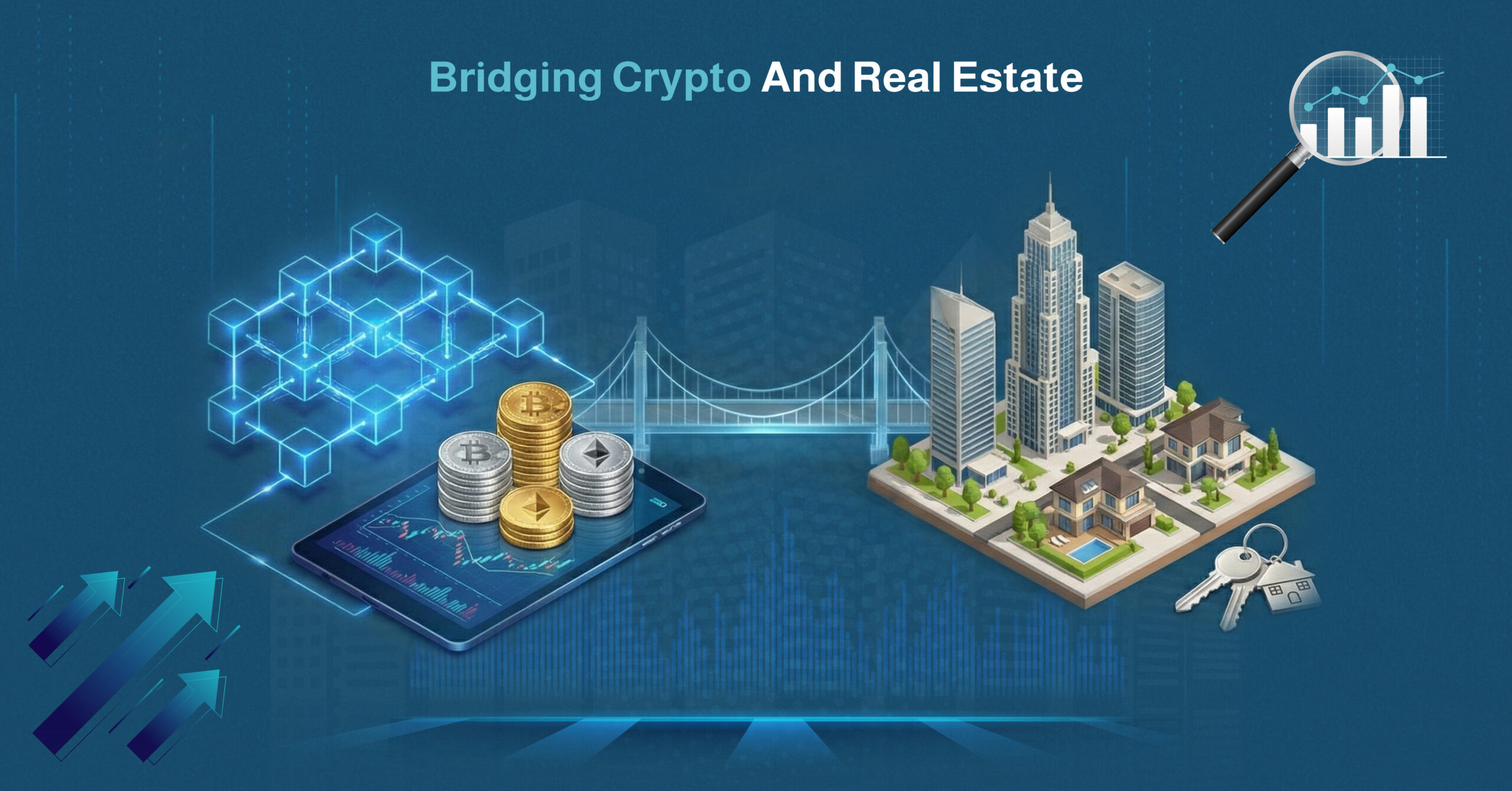
This is where bridging crypto and real estate comes into the picture. In simple terms, it is about linking digital assets to real-world property so that investment value is supported by something tangible. Instead of crypto existing in isolation, it becomes connected to income-generating assets like residential or commercial real estate.
This article explains bridging crypto and real estate in practical terms, without technical overload. It covers how blockchain connects to property, how income is generated, what risks and protections exist, and who this approach is best suited for.
To set expectations clearly, this article will explain:
- What bridging crypto and real estate actually means
- How property-backed digital assets work
- How returns are generated and tracked
- What investors should understand before participating
Bridging crypto and real estate: what it really means for investors
At its core, bridging crypto and real estate is about connecting two very different asset classes. Crypto is digital, fast-moving, and often volatile. Real estate is physical, slower, and usually tied to long-term income or value growth. Bridging them means using blockchain technology to represent real estate value digitally.
Instead of buying a full property, investors hold digital tokens or assets that are linked to real estate ownership or revenue. These tokens reflect a share in an underlying property or project, rather than acting as a standalone cryptocurrency.
What this looks like in practice
For investors, bridging crypto and real estate often involves the following structure:
- A real property exists and is legally owned or managed
- The property is divided into digital units using blockchain technology
- Investors acquire these units using crypto or digital platforms
- Income or value changes are reflected digitally
This does not mean investors own a house in the traditional sense. Instead, they hold a digital representation tied to real-world property performance.
Why this approach exists
Investors are drawn to bridging crypto and real estate because it offers:
- Exposure to physical assets without full ownership
- Smaller entry amounts compared to buying property directly
- Digital tracking of investment performance
- A clearer link between crypto and real-world value
The key point is that value is anchored to property, not market hype alone.
How blockchain technology connects digital assets to property
Blockchain acts as the bridge that makes bridging crypto and real estate possible. It functions as a secure digital record that tracks ownership, transactions, and income distribution linked to a property.
Rather than storing records across multiple systems, blockchain keeps everything in one transparent ledger. This helps reduce confusion around who owns what and how returns are allocated.
How tokenization works in simple terms
Tokenization is the process that connects blockchain to property. Here is a simple breakdown:
| Step | What happens | Why it matters |
| Property identification | A real asset is selected and structured | Ensures real-world backing |
| Legal structuring | Ownership or revenue rights are defined | Protects investor interests |
| Token creation | Digital units are issued on blockchain | Enables fractional access |
| Investor participation | Tokens are purchased or allocated | Lowers entry barriers |
| Ongoing tracking | Performance is recorded digitally | Improves transparency |
Blockchain does not replace legal ownership. Instead, it records economic rights linked to property in a digital format.
Why blockchain adds value
In bridging crypto and real estate, blockchain helps by:
- Recording transactions clearly
- Reducing manual paperwork
- Allowing real-time visibility into holdings
- Supporting cross-border participation
The technology supports the structure, but the property remains the foundation of value.
How revenue is generated when bridging crypto and real estate
Income generation is one of the main reasons investors explore bridging crypto and real estate. Unlike purely digital assets, property-backed models rely on real-world cash flow or asset appreciation.
Revenue does not come from token price speculation alone. It comes from how the underlying property performs over time.
Common revenue sources
When bridging crypto and real estate, returns usually come from one or more of the following:
- Rental income
Properties generate rental payments, which are distributed proportionally to digital asset holders.
- Asset value growth
If a property increases in value and is sold, profits may be shared based on token ownership.
- Hybrid models
Some structures combine regular income with long-term capital growth.
How payouts typically work
Most platforms follow a structured payout approach:
- Income is collected at the property level
- Expenses are deducted
- Net revenue is distributed digitally
- Investors track payouts through dashboards or wallets
This is where Gamma Assets come into play, offering a structured way for investors to participate in real estate-backed digital models without managing property directly.
The key point is that revenue logic stays tied to property performance, not crypto market trends alone.
Risks, regulations, and investor protections
While bridging crypto and real estate offers new access points, it does not remove risk. Understanding the downsides is just as important as understanding the benefits.
Real estate can underperform, and digital systems introduce their own risks. Regulations also vary by region, especially in emerging crypto-property models.
Key risks investors should be aware of
Here are the main risk categories involved:
- Market risk
Property values and rental demand can change over time.
- Liquidity risk
Some digital real estate investments require holding capital for a fixed period.
- Platform risk
The structure and compliance of the platform matter.
- Regulatory risk
Rules around digital assets differ across jurisdictions.
Common investor protections
Well-structured bridging crypto and real estate models usually include:
- Clear legal documentation
- Defined ownership or revenue rights
- Transparent reporting
- Compliance with local regulations
These protections do not guarantee outcomes, but they help investors understand what they are participating in and what boundaries apply.
Who bridging crypto and real estate is best suited for
Bridging crypto and real estate is not designed for every investor. It works best for people who understand both the potential and the limits of combining digital assets with property.
This approach sits between traditional real estate investing and pure crypto exposure.
Investor profiles that often fit this model
- Crypto holders seeking real-world backing
Investors who want to reduce reliance on price speculation.
- Property investors exploring digital access
Those interested in fractional ownership and simplified participation.
- Diversification-focused professionals
Investors adding property exposure without buying assets directly.
- Cross-border investors
Individuals who want digital access to property markets without local ownership complexity.
This model may not suit investors looking for quick exits or full operational control over properties.
Understanding bridging crypto and real estate before investing
Bridging crypto and real estate connects digital assets to something tangible: property and the income it can generate. By using blockchain as a record-keeping and access layer, investors can participate in real estate-backed models without traditional ownership responsibilities.
The value of this approach lies in its structure. Real estate provides the foundation, blockchain provides transparency, and platforms provide access. None of these remove risk, but together they can create clearer investment paths than standalone digital assets.
Understanding how bridging crypto and real estate works, how revenue is generated, and what protections are in place is essential before participating. Informed exploration, not speculation, is what allows investors to use these models responsibly.
Frequently asked questions about bridging crypto and real estate
What does bridging crypto and real estate actually involve?
Bridging crypto and real estate involves linking digital assets to real-world property through blockchain. Investors hold digital units that represent economic rights tied to a physical asset rather than owning the property directly.
Is bridging crypto and real estate safe for beginners?
It can be suitable for beginners if the platform is transparent and compliant. However, beginners should understand property fundamentals, digital asset risks, and investment timelines before committing funds.
How do investors earn returns when crypto is linked to property?
Returns usually come from rental income, property value growth, or a combination of both. These returns are distributed digitally based on the investor’s share in the underlying property.