Property has long been viewed as a stable way to build wealth, but the way people access real estate investments has changed significantly. Today, investors are no longer limited to buying physical property or traditional real estate funds. Digital ownership models have introduced new options, including tokenized real estate.
This has led many investors to ask an important question: how do real estate tokens vs REITs compare, and which option is better suited to different financial goals?
While both models allow investors to gain exposure to property without owning buildings outright, they differ in structure, ownership, liquidity, and risk. Understanding these differences is essential before deciding where to place your capital. This article breaks down real estate tokens vs REITs in a clear, practical way, so you can make informed decisions with confidence.
More topics can be read on the Gamma blog
Real Estate Tokens vs REITs: a High-Level Comparison
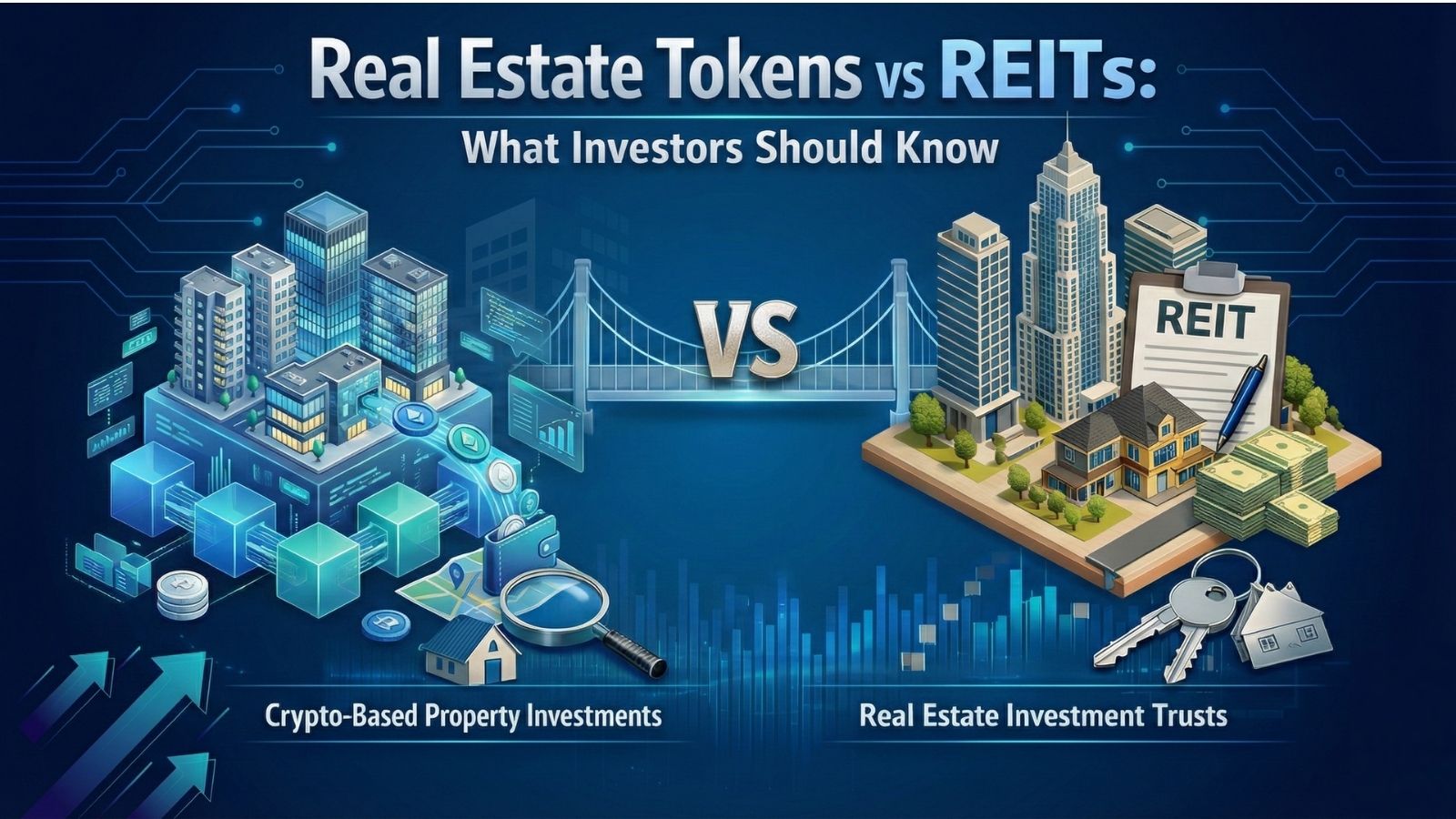
At a glance, real estate tokens and REITs may seem similar. Both provide indirect access to property investments, and both aim to generate income and long-term value. However, the underlying mechanics are very different.
REITs are established financial vehicles that pool investor capital to buy and manage income-generating real estate. Investors purchase shares in the trust, not in the individual properties themselves.
Real estate tokens, on the other hand, represent fractional digital ownership of specific properties or property portfolios. These tokens are issued on blockchain infrastructure and allow investors to own a defined portion of an asset.
The table below outlines the core differences between real estate tokens vs REITs and provides a foundation for a deeper comparison.
| Feature | Real Estate Tokens | REITs |
| Ownership Type | Fractional ownership of specific properties | Shares in a real estate investment trust |
| Asset Exposure | Direct link to identified assets | Indirect exposure to a managed portfolio |
| Investment Structure | Blockchain-based digital tokens | Traditional regulated financial securities |
| Income Source | Rental income is distributed proportionally | Dividends from pooled rental income |
| Entry Cost | Often a low minimum investment | Share price dependent, often higher |
| Liquidity | Platform-based secondary markets | Public market trading during market hours |
| Transparency | On-chain records and asset-level data | Period reports and disclosures |
| Investor Control | Asset-specific selection | Limited control over asset choices |
This high-level view shows that while both models provide access to property markets, real estate tokens vs REITs differ significantly in how ownership and participation work.
Ownership and Income Structure Differences
One of the most important distinctions when comparing real estate tokens vs REITs is how ownership is defined.
When it comes to REITs, investors own shares in a company or trust that manages multiple properties. Income is generated through rent collected across the portfolio and distributed as dividends. Individual investors do not own specific properties and have little influence over asset selection or management decisions.
Real estate tokens function a little differently. Each token represents a fractional ownership interest in a specific property or defined portfolio. This means income distributions are tied directly to the performance of that asset. Rental income flows proportionally to token holders based on the number of tokens owned.
This structure creates a clearer connection between asset performance and investor returns. It also allows investors to choose properties that align with their preferences, such as location, asset type, or income profile.
When evaluating real estate tokens vs REITs, this difference matters for investors who value transparency and asset-level exposure over pooled investment structures.
Liquidity, Entry Costs, and Exit Options
Liquidity is often cited as a major advantage of REITs, and for good reason. Publicly traded REITs can be bought and sold on stock exchanges during market hours, offering relatively quick entry and exit compared to physical property ownership.
However, real estate tokens are changing how liquidity is approached in property investing. Many tokenized platforms offer internal secondary markets where investors can sell tokens to other users. While these markets are still developing, they provide more flexibility than traditional private property investments.
Entry costs also differ substantially in the real estate tokens vs REITs comparison. REIT shares can be accessible, but prices fluctuate with market demand and broader equity market conditions. Real estate tokens often allow participation with much smaller minimum investments, making them attractive to first-time or diversified investors.
Exit options depend heavily on platform structure, regulatory environment, and market activity. REIT investors rely on stock market liquidity, while token investors rely on platform-based demand. Each approach has advantages and limitations that should be considered carefully.
In practice, liquidity is not just about how quickly an asset can be sold, but also about the conditions under which it is sold. REIT prices can move sharply during broader market events, even when the underlying properties remain stable. This means investors may exit quickly, but not always at a price that reflects property performance.
Real estate tokens are less exposed to daily market sentiment, as pricing is typically linked more closely to asset fundamentals and platform demand. While this can reduce short-term volatility, it also means exits may take longer during quieter market periods. Investors comparing real estate tokens vs REITs should consider whether speed or price stability matters more when planning an exit strategy.
Risk, Regulation, and Transparency Compared
Risk profiles vary between real estate tokens vs REITs, largely due to regulation and market maturity.
REITs operate within well-established regulatory frameworks. They are subject to strict reporting requirements, governance rules, and investor protection standards. This regulatory clarity provides a level of comfort for conservative investors.
Real estate tokens exist in a newer regulatory landscape. While many platforms work closely with regulators and implement strong compliance measures, standards can differ across jurisdictions. Investors must evaluate platform credibility, legal structures, and asset backing carefully.
Transparency is another area where differences emerge. REITs provide quarterly and annual reports, offering insight into portfolio performance and financial health. Real estate tokens often provide asset-level data and on-chain transaction records, allowing investors to track ownership and distributions with greater precision.
When comparing real estate tokens vs REITs, it is important to balance regulatory maturity with transparency and technological innovation.
Real Estate Tokens vs REITs on Gamma Assets
Gamma Assets bridges the gap between traditional property investing and digital ownership by offering a regulated, transparent tokenized real estate platform.
Through Gamma Assets, investors can access fractional property ownership with clear asset backing, defined income distribution mechanisms, and structured compliance. The platform focuses on making real estate tokens accessible while maintaining strong governance and investor protections.
When evaluating real estate tokens vs REITs, Gamma Assets provides an option for investors who want direct exposure to property assets without the barriers associated with traditional real estate ownership or public market volatility.
By combining blockchain efficiency with real-world asset management, Gamma Assets offers a modern alternative for investors seeking clarity, flexibility, and control.
You can start investing now from the Gamma Asset Investment Platform
When comparing real estate tokens vs REITs, the real difference lies in how involved you want to be and how you prefer your property exposure to work. REITs offer a familiar, regulated route into real estate, with pooled assets and income that suit investors who value simplicity and market liquidity. Real estate tokens take a more direct approach, giving investors fractional ownership in specific assets, clearer visibility into performance, and lower barriers to entry.
Neither option is a shortcut to guaranteed returns, and neither replaces the need for research and realistic expectations. What they do offer are two distinct ways to participate in the property market without owning buildings outright. Some investors may lean toward the stability of REITs, others toward the transparency and flexibility of tokenized real estate, and many will find value in holding both.
Ultimately, understanding real estate tokens vs REITs allows you to choose an approach that fits your financial goals, time horizon, and comfort with risk. The right option is the one that supports steady, informed decision-making rather than chasing trends.
FAQs
Are real estate tokens safer than REITs?
Safety depends less on the structure itself and more on how the investment is regulated, managed, and disclosed. REITs operate within long-established regulatory frameworks and are required to meet strict reporting and governance standards. This makes them familiar and predictable for many investors.
Real estate tokens operate in a newer environment. While the technology allows for greater transparency at the asset level, investor protection depends heavily on the platform issuing the tokens, the legal structure behind them, and the jurisdiction in which they operate. Well-structured token platforms clearly define ownership rights, income distribution, and asset custody, while weaker platforms may lack clarity.
Rather than asking whether real estate tokens vs REITs are safer in general, investors should evaluate each opportunity individually. Regulation, asset quality, platform credibility, and transparency matter far more than the label itself.
Do REITs or tokens offer better liquidity?
REITs are generally more liquid because they are traded on public stock exchanges. Investors can usually buy or sell shares quickly during market hours, subject to market conditions. However, this liquidity also means REIT prices can be affected by broader stock market movements that have little to do with property performance.
Real estate tokens approach liquidity differently. Instead of relying on public exchanges, liquidity is typically provided through platform-based secondary markets. This allows investors to sell fractional ownership without liquidating entire properties, but liquidity depends on demand within the platform ecosystem.
When comparing real estate tokens vs REITs, REITs currently offer more consistent liquidity, while tokens aim to improve liquidity within traditionally illiquid property markets. Each model comes with trade-offs between flexibility and market exposure.
Can investors hold both?
Yes, and many do. Real estate tokens and REITs serve different purposes and can complement each other within a diversified portfolio. REITs provide broad exposure to property markets and are easy to trade, while real estate tokens allow for targeted asset selection and lower entry points.
Holding both can help balance stability with innovation. REITs may offer consistency and regulatory familiarity, while tokens can provide access to specific assets, regions, or income profiles that may not be available through traditional funds.
From a portfolio perspective, understanding real estate tokens vs REITs makes it easier to use each tool intentionally rather than viewing them as competing options.