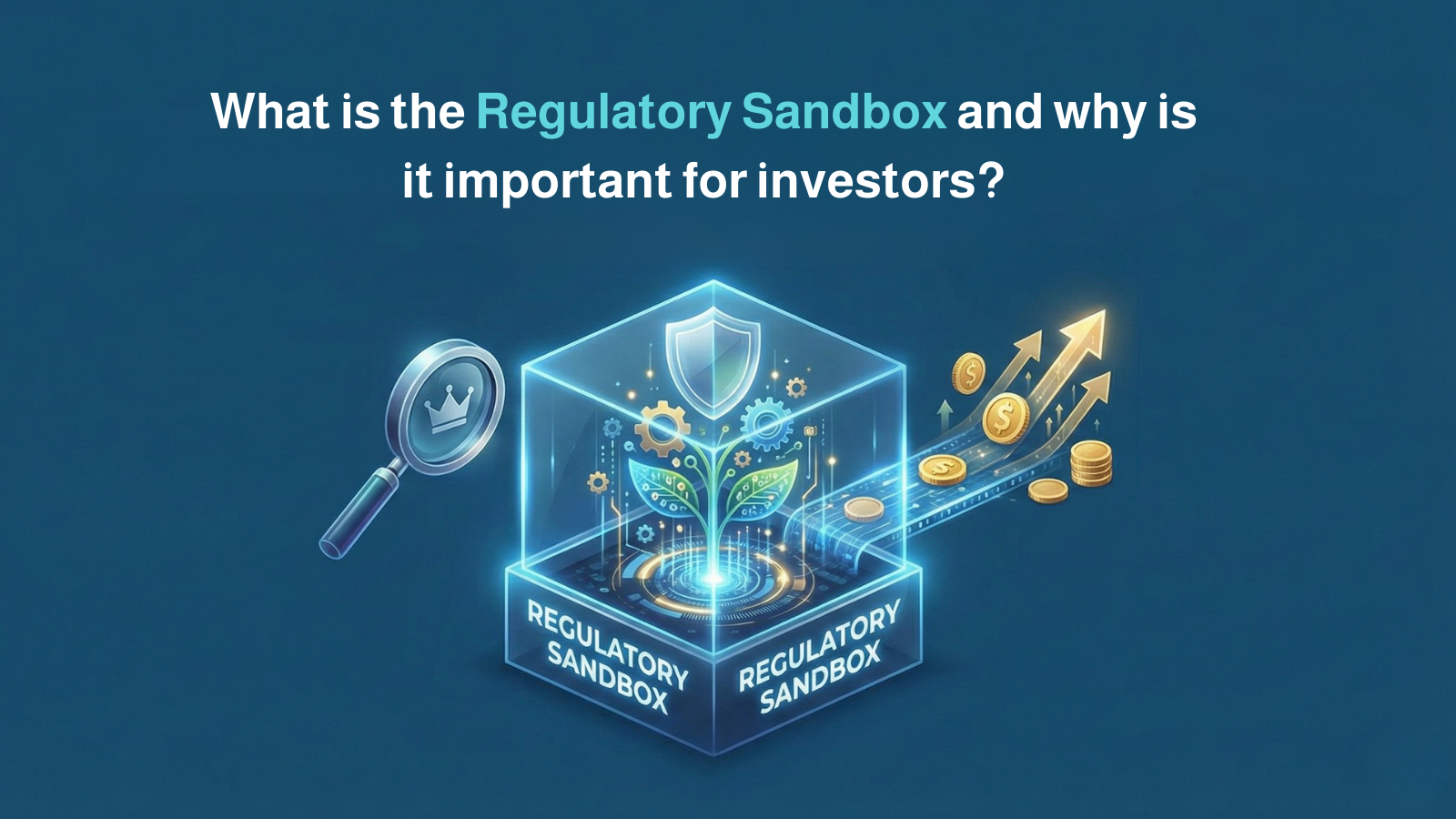
(Regulatory Sandbox)
In the fast-moving world of financial technology (FinTech), innovation often advances faster than the market’s ability to distinguish between a “shiny idea” and a model that can be operated with confidence. That is why the Regulatory Sandbox emerged as a practical solution—one that balances encouraging innovation with protecting users and investors.
According to the FAQ issued by the Saudi Central Bank (SAMA), the Regulatory Sandbox is a framework that enables the testing of innovative business models, products, or financial services in a live environment, but within pre-defined limits and criteria (such as service scope, number of customers, or transaction volumes). Its role is particularly relevant when solutions are not currently covered by an existing regulatory framework or applicable licensing requirements.
In one clear sentence:
A real-world test under clear regulatory controls—rather than a random launch followed by late-stage fixes.
What does the Regulatory Sandbox mean according to SAMA?
The Regulatory Sandbox is not a public relations campaign, nor is it a substitute for regulation or licensing. It is a structured testing program that allows a financial solution to be trialed in a real market environment under a clearly defined set of controls and parameters. These limits are not a minor detail—they are the core of the concept, because placing boundaries on operations makes the test measurable, trackable, and less risky.
A key point in SAMA’s documentation is that the Sandbox is designed for solutions not covered by existing regulation. If there is a clear licensing pathway for a specific activity, then joining the Sandbox is not considered the appropriate route.
Why did SAMA launch the Regulatory Sandbox?
The document highlights two practical objectives that matter to investors above all:
1) Enabling financial innovation within a disciplined framework
The Sandbox allows new financial models and services—those not covered by existing regulation—to be tested, supporting market development and paving the way for more advanced solutions.
2) Understanding and managing risks early
The purpose goes beyond “allowing experimentation.” It also enables the regulator to monitor and analyze potential risks associated with new models before full commercial launch.
This is precisely what gives the Regulatory Sandbox strong value for investors: it indicates that innovation is not happening in a vacuum, but within a framework that can be reviewed, assessed, and improved.
Why is the Regulatory Sandbox important for investors?
The Sandbox does not guarantee profits, nor does it eliminate investment risk. However, it does mean something highly important: the model is being tested in real conditions under defined rules. This creates value on three levels:
1) Reducing “scale before maturity” risk
Testing within pre-set limits and criteria reduces the likelihood of rapid expansion before operational readiness is proven. Instead of the market “learning” through costly failures, testing is controlled from the outset.
2) Measuring success through real operational performance
SAMA’s document notes that success factors during testing may relate to user satisfaction, stability, resilience, and scalability.
This means the project is not assessed on the “idea” alone, but on its ability to operate reliably and deliver a trustworthy user experience.
3) Clearer signals of discipline and accountability
When testing takes place in a live environment under official controls, operational discipline improves and the model becomes clearer. While this does not equate to automatic full licensing, it provides investors with a useful signal: there is a testing framework that is monitored and evaluated.
Why is being selected into the Sandbox often understood as a sign of “distinction”?
The word “distinctive” should not be decorative marketing. In practice, the presence of a project or company within the Sandbox implies three meaningful points, based on the program’s nature as described by SAMA:
-
An innovative solution not covered by existing regulation: meaning it is not simply a repeat of a traditional service, but a new model that requires structured testing.
-
Testable in a live environment within clear boundaries: indicating operations take place under pre-defined limits and criteria—not through uncontrolled open-market rollout.
-
Moving toward measurable operational maturity: because success is tied to real performance indicators such as stability, resilience, scalability, and user satisfaction.
Does the Regulatory Sandbox mean live customer data is used immediately?
SAMA notes an important point regarding pre-authorization testing: testing may be conducted in development environments using dummy data, but live customer data or production environments are not permitted without appropriate authorization.
This matters to investors because it reflects clear boundaries across operational stages and levels of risk.
Does a successful test mean automatic licensing?
No—and this should be clearly understood. SAMA confirms that a successful Sandbox test does not automatically result in a full license. Licensing requires meeting specific requirements, submitting a formal application, and undergoing an evaluation based on compliance obligations.
The document also indicates that the testing phase typically falls within a timeframe of six to twelve months.
Where does Osool Gamma fit in this context?
Within this framework, Osool Gamma is proud to be among the early companies selected within the Regulatory Sandbox—aligned with our vision to deliver a clearer and more disciplined investment experience, where trust is built through a measurable model, not through promises.
(With the clarification that participating in the Sandbox is understood as part of a structured testing pathway—not a claim of automatic licensing or guaranteed returns.)
Conclusion
SAMA’s Regulatory Sandbox is a framework that enables testing innovative financial solutions in a live environment within defined limits and criteria. It aims to support innovation while monitoring and analyzing risks before broader commercial expansion. For investors, it is not a “guarantee,” but an important indicator that a project is progressing through a disciplined real-world test, with measurable operational standards such as stability, resilience, scalability, and user satisfaction.
for More topics can be read on the Gamma blog