Diversification is one of the most widely accepted principles in investing. Instead of placing all capital into a single asset or market, investors typically spread their investments across multiple opportunities to manage risk and improve long-term stability. This approach is common in equity markets and fixed-income portfolios, but it has traditionally been more difficult to apply in real estate investing.
Property investments often require significant capital commitments, which can limit an investor’s ability to hold multiple assets. Purchasing several properties across different locations may be unrealistic for many individuals, particularly those who are just beginning to build their investment portfolios. As a result, investors sometimes become heavily concentrated in a single property or market.
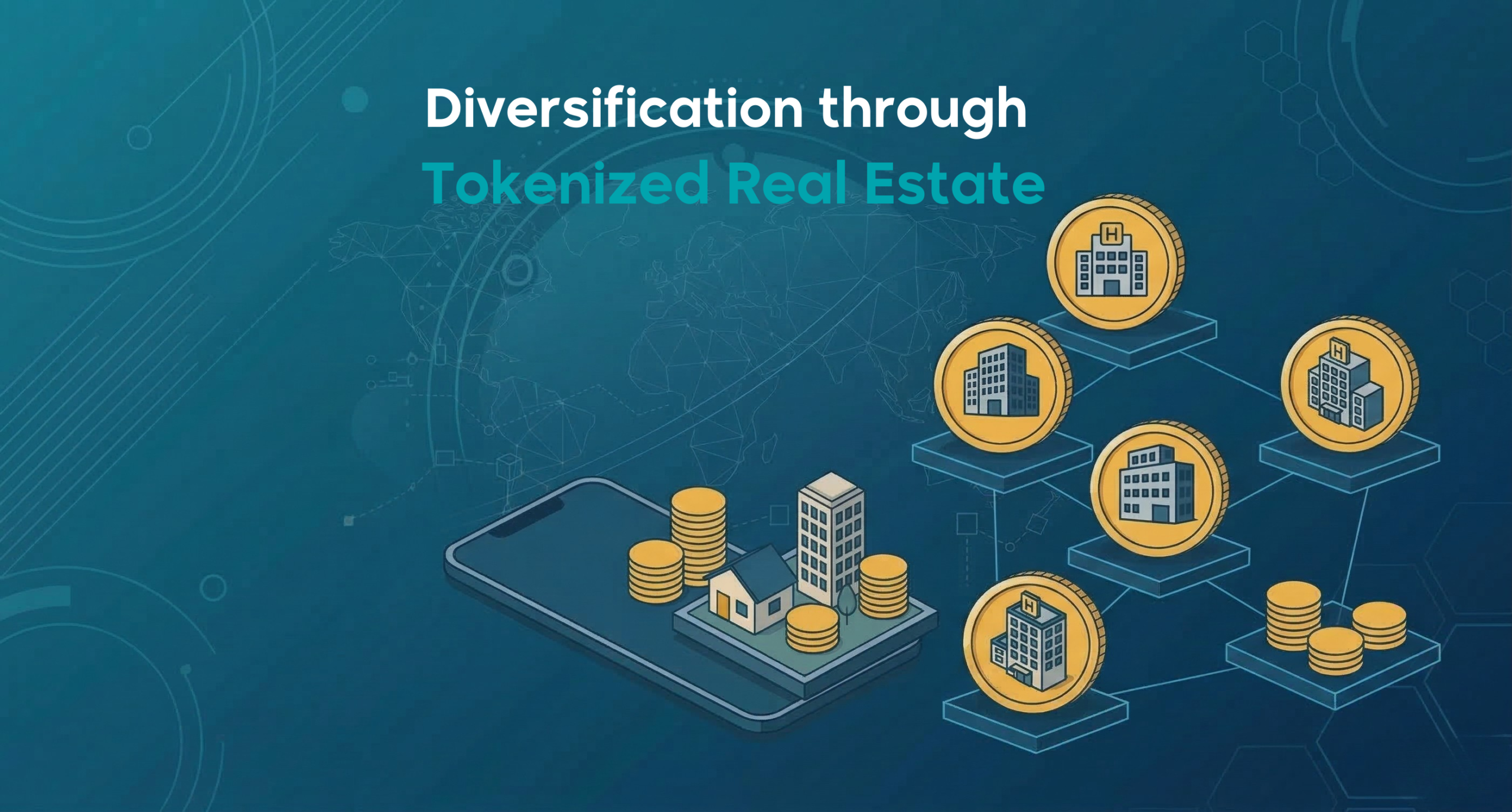
Digital investment models are beginning to change this dynamic. Through fractional ownership structures, tokenized real estate allows investors to participate in property-backed opportunities without purchasing entire assets. This concept has created growing interest in diversification through tokenized real estate, where investors can potentially spread capital across several real estate opportunities.
Understanding how diversification through tokenized real estate works can help investors evaluate whether this approach supports broader portfolio strategies. By examining fractional ownership, market exposure, and risk management, investors can better understand how digital real estate investments may contribute to more balanced portfolios.
More topics can be read on the Gamma blog
Understanding Diversification Through Tokenized Real Estate
The concept of diversification through tokenized real estate begins with the structure of tokenized investments themselves. Tokenization allows the economic value of a real estate asset to be divided into smaller digital units that represent participation in a property-backed investment.
Rather than purchasing a full building, investors may acquire fractional portions of a real estate asset through digital investment platforms. These units are typically linked to a legal entity that owns the underlying property and distributes returns based on rental income or asset performance.
This structure makes diversification through tokenized real estate possible because investors are no longer limited to committing large amounts of capital to a single property. Instead, smaller investments can be allocated across multiple opportunities.
For example, an investor may choose to participate in residential properties in one city while also allocating capital to commercial developments in another region. This type of allocation allows investors to gain exposure to different property markets while reducing reliance on the performance of a single asset.
The growing interest in diversification through tokenized real estate reflects how digital investment models can reshape traditional real estate participation. By lowering the capital threshold required for entry, tokenized structures allow investors to think about property investments in the same diversified way they might approach other asset classes.
Another point investors often consider is how diversification works across different geographic markets. Real estate performance can vary significantly between regions depending on economic growth, infrastructure development, and local demand for housing or commercial space. Through diversification through tokenized real estate, investors may gain exposure to properties located in multiple cities or even different countries without needing to purchase physical property in each location. This broader exposure can help investors build portfolios that are less dependent on the performance of a single market while still benefiting from the long-term stability traditionally associated with real estate assets.
Why Diversification Matters in Property Investing
Diversification has always played an important role in property investing. Real estate markets can be influenced by local economic conditions, demographic changes, and regional development trends. When an investor holds only one property, the performance of that asset is closely tied to the conditions of a specific market.
For example, if rental demand declines in a particular city or neighborhood, the value and income potential of a single property investment may be affected. This is why many professional investors seek exposure to multiple properties across different locations.
The concept of diversification through tokenized real estate can support this strategy by making it easier to spread investments across various markets. Instead of concentrating capital in one property, investors may allocate smaller amounts across several real estate assets.
Diversification can also involve different property types. Residential buildings, office spaces, logistics facilities, and retail properties each respond differently to economic conditions. Through diversification through tokenized real estate, investors may gain exposure to multiple property sectors within the same portfolio.
Another advantage is that diversification helps balance performance over time. If one property market experiences slower growth, another region or property type may perform more strongly. By spreading investments across multiple assets, investors can reduce the potential impact of a single market downturn.
Understanding the role of diversification helps explain why diversification through tokenized real estate is becoming an increasingly discussed strategy among investors exploring digital property investments.
Diversification can also help investors manage the timing of real estate cycles. Property markets tend to move through periods of expansion, stabilization, and adjustment, and these cycles do not always occur simultaneously across regions. By spreading investments across several opportunities, investors may reduce the impact of slower performance in any single location. Diversification through tokenized real estate allows investors to participate in multiple markets at once, which can help smooth portfolio performance over time. Instead of relying on one property to generate returns, investors may benefit from the combined performance of several real estate assets.
Fractional Investing and Portfolio Expansion
Fractional investing is one of the main mechanisms enabling diversification through tokenized real estate. Instead of requiring investors to purchase entire properties, tokenized investment structures divide real estate assets into smaller investment units.
This approach allows investors to allocate capital across several opportunities rather than committing to a single asset. For instance, an investor may participate in multiple residential developments or diversify across different cities.
Through diversification through tokenized real estate, fractional ownership enables portfolio expansion in a way that traditional property ownership often cannot. Investors who previously needed substantial capital to diversify property holdings can now explore participation across a broader range of opportunities.
Fractional investing can also provide flexibility when adjusting portfolio allocations. Investors may choose to rebalance their property exposure over time by participating in new opportunities or adjusting their holdings across different markets.
In this sense, diversification through tokenized real estate allows property investing to adopt characteristics more commonly associated with financial markets, where investors manage portfolios containing multiple assets rather than relying on a single investment.
While real estate fundamentals remain essential, fractional investing introduces a new level of accessibility that allows investors to approach property investments with greater portfolio flexibility.
Balancing Risk Across Property Markets
Managing risk is one of the primary reasons investors seek diversification. Real estate markets can experience cycles influenced by economic growth, interest rates, and regional development trends. When investors concentrate capital in a single property or location, they may become more exposed to these local fluctuations.
The strategy of diversification through tokenized real estate can help investors balance risk by spreading exposure across multiple assets and markets. Instead of relying on one property to generate income or appreciation, investors can distribute capital across a broader portfolio.
Geographic diversification is one example. Property markets in different regions may respond differently to economic changes. Through diversification through tokenized real estate, investors may participate in properties located in various cities or countries, reducing reliance on a single local market.
Sector diversification is another factor. Residential housing, hospitality properties, and logistics facilities each respond differently to market conditions. Allocating investments across multiple sectors can create a more balanced portfolio.
While diversification does not eliminate risk, it can help reduce the impact of underperformance in any single investment. By spreading exposure across multiple opportunities, diversification through tokenized real estate supports a more balanced approach to property investing.
How Osool Gamma Helps Investors Diversify Real Estate Exposure
Digital investment platforms are playing a growing role in supporting diversification through tokenized real estate. Platforms such as Osool Gamma demonstrate how technology can make property-backed opportunities accessible to a wider range of investors.
If you are interested in diversification through tokenized real estate but want an easier entry point, Osool Gamma allows investors to access multiple property-backed opportunities.
Instead of requiring investors to purchase individual properties, the platform provides structured access to real estate-backed investments through digital participation. Investors can review different opportunities and allocate capital according to their portfolio preferences.
This structure aligns with the principles of diversification through tokenized real estate, where investors aim to spread capital across multiple assets rather than concentrating exposure in a single investment.
By simplifying access to property-backed opportunities, Osool Gamma supports investors who want to build diversified real estate portfolios without managing properties directly.
Access to multiple investment opportunities is an important part of building a diversified property portfolio. Platforms that present investors with a range of real estate-backed opportunities make it easier to allocate capital across different projects rather than concentrating on a single investment. For investors exploring diversification through tokenized real estate, this type of platform structure can support broader portfolio strategies. By reviewing several property opportunities within one platform environment, investors can gradually build exposure to different real estate assets while maintaining oversight of their overall investment portfolio.
You can start investing now from the Osool Gamma Investment Platform
Diversification has always been a fundamental principle of sound investing. In real estate, however, achieving diversification has historically required significant capital and access to multiple property markets.
The emergence of digital investment structures is beginning to change this dynamic. Through fractional ownership models, diversification through tokenized real estate allows investors to spread capital across several property opportunities rather than relying on a single asset.
By enabling participation in multiple markets, property types, and investment structures, tokenized real estate introduces new possibilities for building balanced real estate portfolios. While careful evaluation of assets and platforms remains essential, the concept of diversification through tokenized real estate highlights how digital investment models can complement traditional property strategies.
For investors seeking broader exposure to property markets, tokenized real estate may offer a practical pathway toward more diversified real estate portfolios.
FAQ
What does diversification through tokenized real estate mean?
Diversification through tokenized real estate refers to spreading investments across multiple property-backed opportunities using fractional ownership structures rather than investing in a single property.
Why is diversification important in real estate investing?
Diversification helps reduce risk by spreading investments across different properties, markets, or property types. This approach can help balance portfolio performance over time.
How does fractional investing support diversification?
Fractional investing allows investors to purchase smaller portions of real estate assets. This enables them to allocate capital across multiple opportunities instead of committing to one property.
Is tokenized real estate suitable for diversified portfolios?
Tokenized real estate can complement diversified portfolios by providing exposure to property markets while allowing investors to distribute capital across multiple assets.