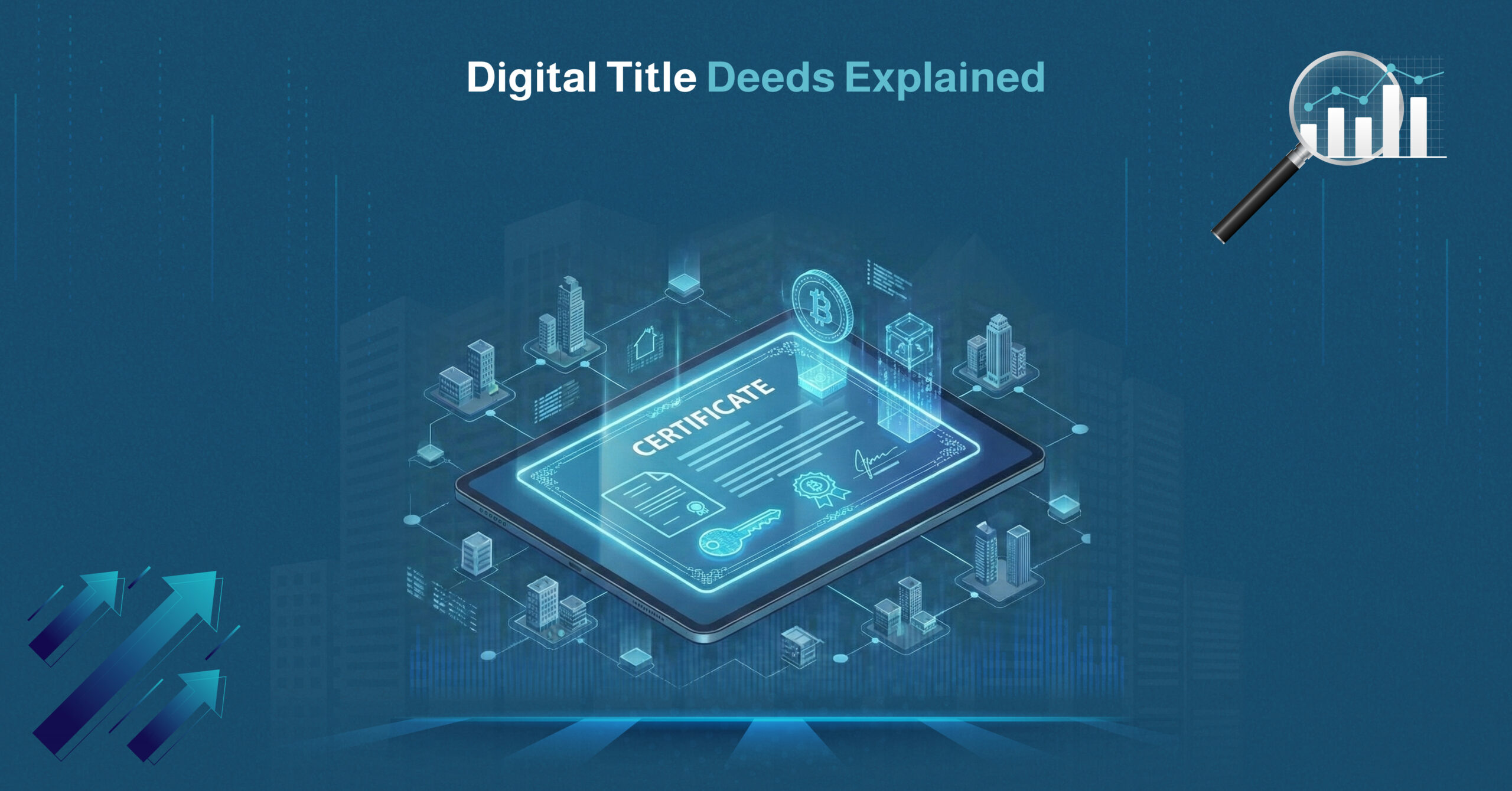
Property ownership records are the epitome of trust in real estate. Buyers, investors, lenders, and regulators all rely on the accuracy of the title deeds to confirm whether a property can be legally sold or transferred. Confidence plummets when the paperwork surrounding the title deed is vague, fragmented or difficult to verify.
Traditional title deed systems rely on traditional documentation, manual processes, and centralized registries. These systems work well, and have for years, but they are vulnerable to delays, administrative errors, documentation loss and fraud. In some jurisdictions, accessing or updating records can take weeks or even months, especially when multiple authorities are involved.
This is where digital title deeds shine. Practically, digital title deeds refer to the property ownership records that are created, stored, and managed electronically rather than the traditional method of paper. The goal is to improve accuracy, transparency, and efficiency while still operating within legal frameworks.
After reading this blog, you should have a better understanding of what digital title deeds are, how ownership is recorded and verified digitally, the role of blockchain in securing records, and how platforms like Gamma Assets rely on digital ownership systems to support transparent property investment models.
Start investing now from the Gamma Asset Investment Platform
Digital Title Deeds Explained: What They Actually Are
Essentially, digital title deeds are just a digital representation of property ownership records. It would be a very different scene in street racing movies, when racing for pink slips, if they had to race for digital ownership, allowed by an awkward scene of looking for wifi. Digital title systems use structured data, verification processes, and audit trails to ensure that each record reflects a valid legal transaction.
The intention of digital title deeds is not to replace property law but rather support it; the legal rights attached to a property still come from legislation and regulation. The difference is how the rights are recorded and managed.
A common misconception is that digital deeds are the same as crypto or purely decentalized systems. In reality, many digital title systems are operated by government land registries or authorized entities. They often combine traditional legal oversight with modern digital infrastructure.
Additionally, an important distinction between digitized documents and fully digital systems is the process of creation. Simply scanning paper documents into a database does not recreate a digital document. Digital title deeds refer to a system where records are created as digital versions, updated digitally, and tracked through controlled workflows.
These systems reduce duplication, improve record accuracy, and make ownership information easier to verify, particularly for investors who rely on timely, reliable data.
How Digital Title Deeds Record and Verify Property Ownership
Recording ownership digitally involves more than just entering names into a database; this is not 1999. Digital title systems use structured data, verification processes, and audit trails to ensure that each record reflects a valid legal transaction.
When a property is registered or transferred, the relevant information is submitted electronically, often through licensed professionals such as conveyancers or notaries. Identity checks, document validation, and compliance reviews still take place, but they are supported by digital workflows rather than paper files.
Digital title deeds explained systems typically include version control and time-stamped records. This means that every change to ownership, whether through a sale, inheritance, or lien registration, is logged and traceable. This reduces the risk of disputes arising from unclear or outdated information.
Verification processes can be streamlined through controlled access. Authorized parties can view or update records based on their role, while the public may have read-only access to certain data. This balance helps protect sensitive information while maintaining transparency.
For investors, this structured approach makes it easier to confirm ownership status and understand any existing claims on a property. Digital title deeds explained in this context are about clarity and traceability, not removing legal safeguards.
Blockchain and Security in Digital Title Deeds Explained
The role of blockchain technology in digital property records is often misunderstood, despite its being part of the conversation. Blockchain doesn’t automatically make property ownership legally valid. Rather, it acts as a security and integrity layer for recording information.
Digital title deeds explained using blockchain means that ownership records or transaction logs are stored on an immutable ledger. Once the information is added, it can’t be altered without leaving a clear trace. This makes unauthorised change or hidden edits almost impossible.
The blockchain supports transparency by allowing stakeholders to verify that records haven’t been tampered with. Each transaction is time-stamped and linked to previous records, creating a continuous chain of evidence, ensuring security.
This, however, doesn’t mean that the blockchain replaces land registries or legal authorities. In most cases, it operates alongside existing systems, rather than in place of. Legal enforceability still depends on whether regulators recognise the digital record as authoritative.
Security benefits also depend on proper implementation. A poorly designed system can still be vulnerable to human error or misuse. Digital title deeds explained should always distinguish between the technology used to secure records and the legal framework that gives them meaning.
Legal Recognition, Risks, and Limitations of Digital Title Deeds
It’s important to note that while digital systems are able to drastically improve property records and management, the ownership still comes from the law rather than technology. The legal strength of digital title deeds is dependent on how they are recognised and regulated within each jurisdiction. Which is why digital title deeds must always separate technical capability from legal enforceability.
In the following table, we will outline where digital title deed systems add value and where traditional legal frameworks remain vital.
| Area | What digital title deed systems improve | What still depends on law and regulation |
| Legal recognition | Faster access to ownership records and updates | Formal recognition by national or regional land registries |
| Ownership clarity | Clear, time-stamped transaction history | Valid contracts, notarisation, and compliance with property law |
| Fraud prevention | Tamper-evident records and audit trails | Courts and regulators resolve disputes and enforce rights |
| Transfer efficiency | Streamlined digital submission and processing | Legal approval of transfers and registration requirements |
| Jurisdictional reach | Consistent digital workflows across platforms | Local property legislation and regulatory differences |
| System risks | Reduced documentation loss and duplication | Cybersecurity standards, governance, and oversight |
It is worthwhile noting that the digital deeds do not mean there is no legal risk. They record and reflect ownership transparently, but they cannot correct flawed transactions, unclear inheritance claims, or disputes that predate digitisation. In regions where digital systems are still developing, hybrid models remain common, combining digital records with traditional verification processes.
We should view digital title deeds as an efficiency and transparency tool that supports property systems, not as a substitute for legal due diligence ot regulatory authority.
How Gamma Assets Uses Digital Ownership Records in Practice
Platforms, such as ours at Gamma Assets, rely on secure digital ownership records to support transparent and structured property investment models. It is part of the ethos. By making use of digital records, we at Gamma Assets can clearly document how ownership interests are represented and tracked within our platform.
In practice, this means that property data, investors allocationsm and transaction histories are recorded in a structured digital environment. This supports visibility and auditablity without removing the legal foundations of property ownership.
Gamma Assets integrates digital ownership records with its broader investment framework, allowing investors to view their holdings and understand how their interest are represented are represented. This approach supports clarity rather than complexity.
For a deeper understanding of how digital records support tokenized property structures, you can explore our article on The Gamma Asset Property Model. Digital title deeds explained in this context highlight how digital records can support transparency and operational efficiency while still depending on recognised legal and regulatory structures.
Digital title deeds explained systems represent a shift in how property ownership records are managed; they are not meant to replace property laws themselves but rather act as a support. By moving records into secure digital environments, these systems improve transparency, traceability, and efficiency across the property lifecycle.
Legal recognition remains central. Digital records are only as effective as the regulatory framework which supports them. Technology can enhance trust, but it doesn’t create legal rights on its own.
For investors, understanding digital title deeds means looking beyond the technology to the legal structure underpinning it. When implemented responsibly, digital records can strengthen confidence, reduce friction, and support modern property investment modles with overstating their guarantees.
More topics can be read on the Gamma blog
FAQ Regarding Digital Title Deeds Explained
Are digital title deeds legally recognized?
Legal recognition depends on the jurisdiction. Some countries have fully adopted digital title systems within their land registries, while others use hybrid models. Investors should always check how digital records are treated under local property law.
How do digital title deeds prevent fraud or ownership disputes?
Digital title deeds explained systems reduce risk through structured data, audit trails and controlled access. Technologies such as blockchain can make records tamper-resistant, but they do not eliminate the need for legal oversight and due diligence.
Do digital title deeds replace land registries?
No. In most cases, digital title deeds operate within or alongside existing land registries. They modernize how records are managed, but don’t remove the role of the legal authorities.