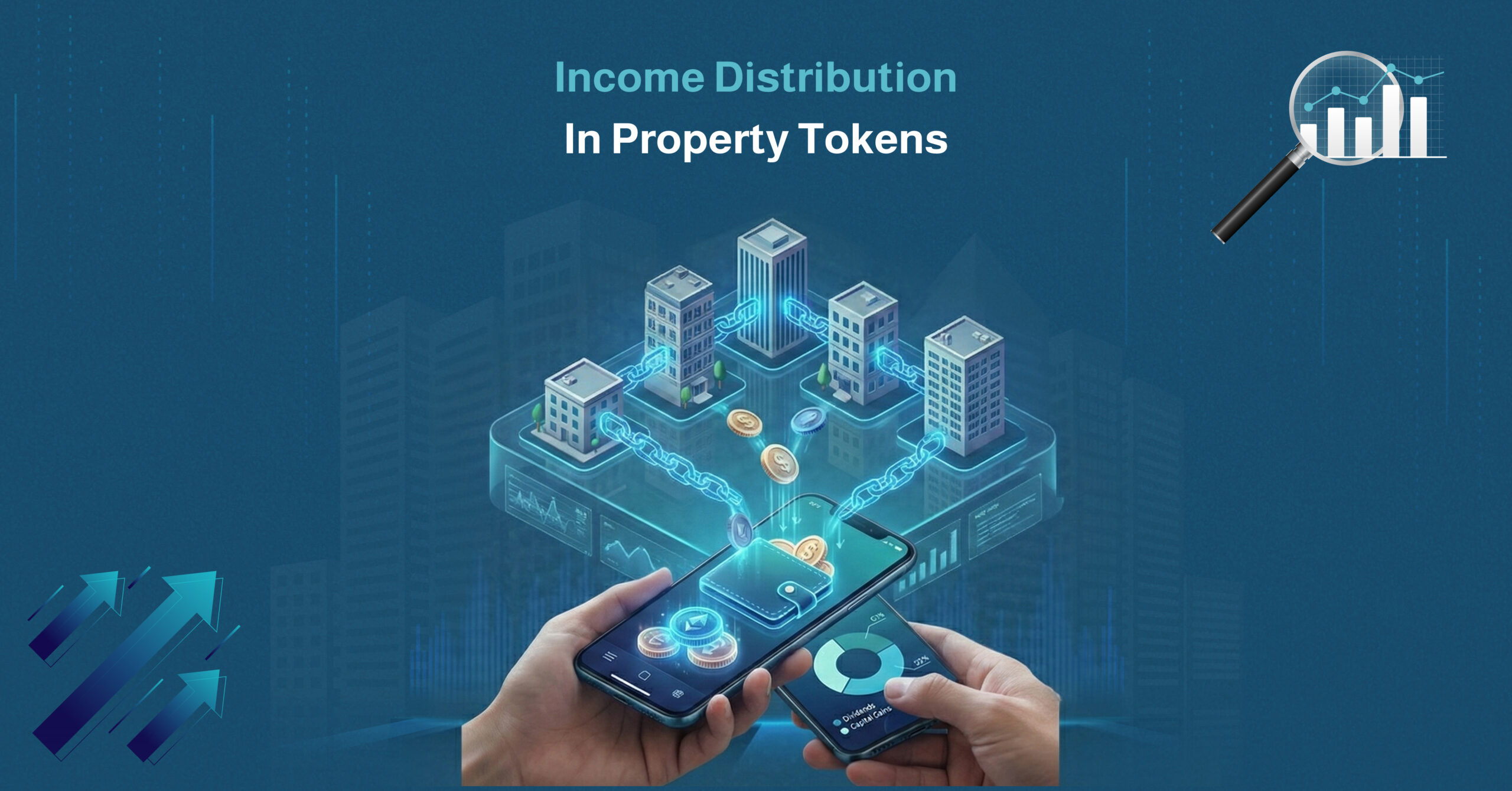
For most property investors, income is the main reason to invest. Rental cash flow helps cover costs, build wealth over time, and create predictable returns. Traditionally, access to that income required buying an entire property, managing tenants, and dealing with banks, agents, and paperwork.
Tokenization has changed that model. Investors can now access property income through digital tokens that represent a share of a real asset. Instead of owning a full unit, investors hold tokens that entitle them to a portion of the property’s income. This shift has opened property income to a wider group of investors across Saudi Arabia, the MENA region, and beyond.
Income distribution in property tokens refers to how rental income is collected, calculated, and paid out to token holders. It sounds simple, but the process includes costs, timing rules, and risk factors that investors need to understand clearly.
By the end of this article, you will understand how income distribution in property tokens works in practice, what affects payouts, and why transparency matters when planning long-term income from tokenized real estate.
Income distribution in property tokens: how it works in practice
At its core, income distribution in property tokens follows the same logic as traditional rental income. A property earns money, expenses are paid, and the remaining income is shared with investors. The difference is how ownership and payouts are structured.
The basic process works like this:
- A property is legally structured and tokenized
- Investors purchase tokens linked to that property
- Rental income is collected from tenants
- Operating costs are deducted
- Net income is distributed to token holders
Each token represents a defined economic interest, usually proportional to the number of tokens held. If you own 2 percent of the tokens, you are entitled to 2 percent of the distributable income, subject to platform terms.
Income distribution in property tokens is typically automated through platform systems, with records visible to investors. This reduces manual errors and improves clarity, but it does not remove risk. Income still depends on tenants paying rent, properties being occupied, and costs being controlled.
Understanding this process helps investors set realistic expectations and avoid confusing tokenization with guaranteed income.
Where rental income comes from in tokenized properties
The source of income in tokenized property investments is usually straightforward. Most income comes from rent paid by tenants who occupy residential, commercial, or mixed-use properties.
Common income sources include:
| Income Source | Description |
| Residential rent | Monthly lease payments from tenants |
| Commercial rent | Office, retail, or warehouse leases |
| Short-term stays | Serviced apartments or managed units |
| Ancillary income | Parking, storage, or service fees |
Income distribution in property tokens depends heavily on the stability of these income sources. Long-term leases often provide more predictable cash flow, while short-term rentals may fluctuate based on demand.
Vacancy plays a key role. If a unit is empty, there is no rental income for that period. Token holders share both the upside and the downside. Platforms that publish occupancy rates and income reports help investors understand how properties are performing over time.
Rental income is usually collected into a central account before being processed for distribution. This creates a clear audit trail, which is one of the main advantages of tokenized property models.
How income distribution in property tokens is calculated and paid
Once rental income is collected, the next step is calculating how much can be paid to investors. This is where income distribution in property tokens becomes more technical, but the logic remains simple.
The calculation usually follows this order:
- Gross rental income is recorded
- Operating expenses are deducted
- Reserve funds may be allocated
- Net distributable income is calculated
- Payouts are allocated based on token ownership
Payments are often made monthly or quarterly, depending on the platform and property type. Some platforms pay in fiat currency, while others may offer stablecoin payouts. The method is defined upfront in the investment documentation.
Automation helps ensure that income distribution in property tokens is consistent and traceable. Investors can usually see reports showing how figures were calculated, which supports trust and accountability.
Timing matters. Delays can happen if tenants pay late, expenses increase unexpectedly, or regulatory checks are required before distributions are released.
Fees, costs, and deductions that affect income distribution
No property investment distributes 100 percent of rental income. Costs are part of owning and operating real estate, and income distribution in property tokens is no exception.
Typical deductions include:
- Property management fees
- Maintenance and repairs
- Insurance and utilities
- Platform or administration fees
- Reserve allocations for future costs
These deductions are applied before income is distributed to token holders. Transparent platforms disclose these costs clearly so investors understand their net income, not just headline yields.
To make this clearer, here is a simplified example:
| Item | Amount |
| Monthly rent collected | $10,000 |
| Total operating costs | $3,000 |
| Net distributable income | $7,000 |
If you own 1 percent of the tokens, your share would be $70 for that period, before any applicable taxes.
Understanding fees helps investors compare opportunities fairly and avoid unrealistic expectations around income distribution in property tokens.
Who income distribution in property tokens is best suited for
Income distribution in property tokens is not designed for every investor. It works best for people who value transparency, access, and long-term income planning.
This model may suit investors who:
- Want exposure to property income without full ownership
- Prefer smaller investment amounts and diversification
- Are comfortable with income fluctuations
- Value reporting and traceable cash flows
It may be less suitable for investors who expect fixed or guaranteed income. Tokenized property still depends on real-world factors like tenant demand, maintenance costs, and market conditions.
Platforms such as Gamma Assets focus on structuring income distribution in property tokens within clear, documented frameworks. This helps investors understand how income flows, what risks exist, and how performance is measured over time.
As with any property investment, success depends on patience, realistic expectations, and understanding the underlying asset.
Understanding income before you invest
Income distribution in property tokens follows a clear logic. Properties earn rent, costs are deducted, and net income is shared based on token ownership. Tokenization improves access and transparency, but it does not remove risk or guarantee returns.
Understanding how income is collected, calculated, and paid helps investors make informed decisions. Costs, vacancies, and timing all affect payouts, and these factors should be reviewed before investing.
Income distribution in property tokens works best when investors focus on long-term planning rather than short-term promises. Transparent reporting and clear documentation are essential for building trust and confidence in this evolving model.
Taking the time to understand the mechanics now can help investors avoid surprises later.
FAQ: Income Distribution in Property Tokens
How often does income distribution in property tokens occur?
Most platforms distribute income monthly or quarterly. The exact timing depends on rental collection cycles, expense processing, and platform rules. This schedule is usually outlined before you invest.
What happens if a property is vacant or income drops?
If a property has no tenants or rental income decreases, there may be little or no income to distribute for that period. Token holders share this risk, just like traditional property owners.
Is income distribution in property tokens guaranteed?
No. Income distribution in property tokens depends on real rental performance. While systems can improve transparency and efficiency, income is never guaranteed and can vary over time.