Real estate has long been viewed as one of the most stable and reliable asset classes available to investors. Property can generate rental income, provide long-term value appreciation, and act as a hedge against inflation. However, traditional property investing has always come with a major limitation: liquidity. Selling a property often takes time, involves legal processes, and can require months of negotiations before capital becomes accessible again.
This limitation has led many investors to ask whether newer investment models can offer greater flexibility. One of the most widely discussed developments is tokenized real estate, where digital investment units represent economic participation in a property asset. As this model continues to gain attention globally, investors are increasingly exploring liquidity in tokenized real estate and how it compares with traditional property ownership.
Tokenization does not change the underlying nature of real estate itself, but it can change how investors participate in the asset. Instead of owning an entire property, investors may hold smaller digital investment units connected to a real estate asset. These units can potentially be transferred or traded more easily than physical property.
Understanding liquidity in tokenized real estate helps investors evaluate whether this emerging investment structu
re provides meaningful flexibility or simply presents a different way to access real estate markets.
More topics can be read on the Gamma blog
Understanding Liquidity in Tokenized Real Estate
Liquidity refers to how easily an asset can be bought or sold without significantly affecting its value. Highly liquid assets, such as publicly traded stocks, can be sold quickly because there are many buyers and sellers in the market. Traditional real estate, on the other hand, is typically considered a low-liquidity asset because transactions involve legal documentation, financing arrangements, and negotiation between parties.
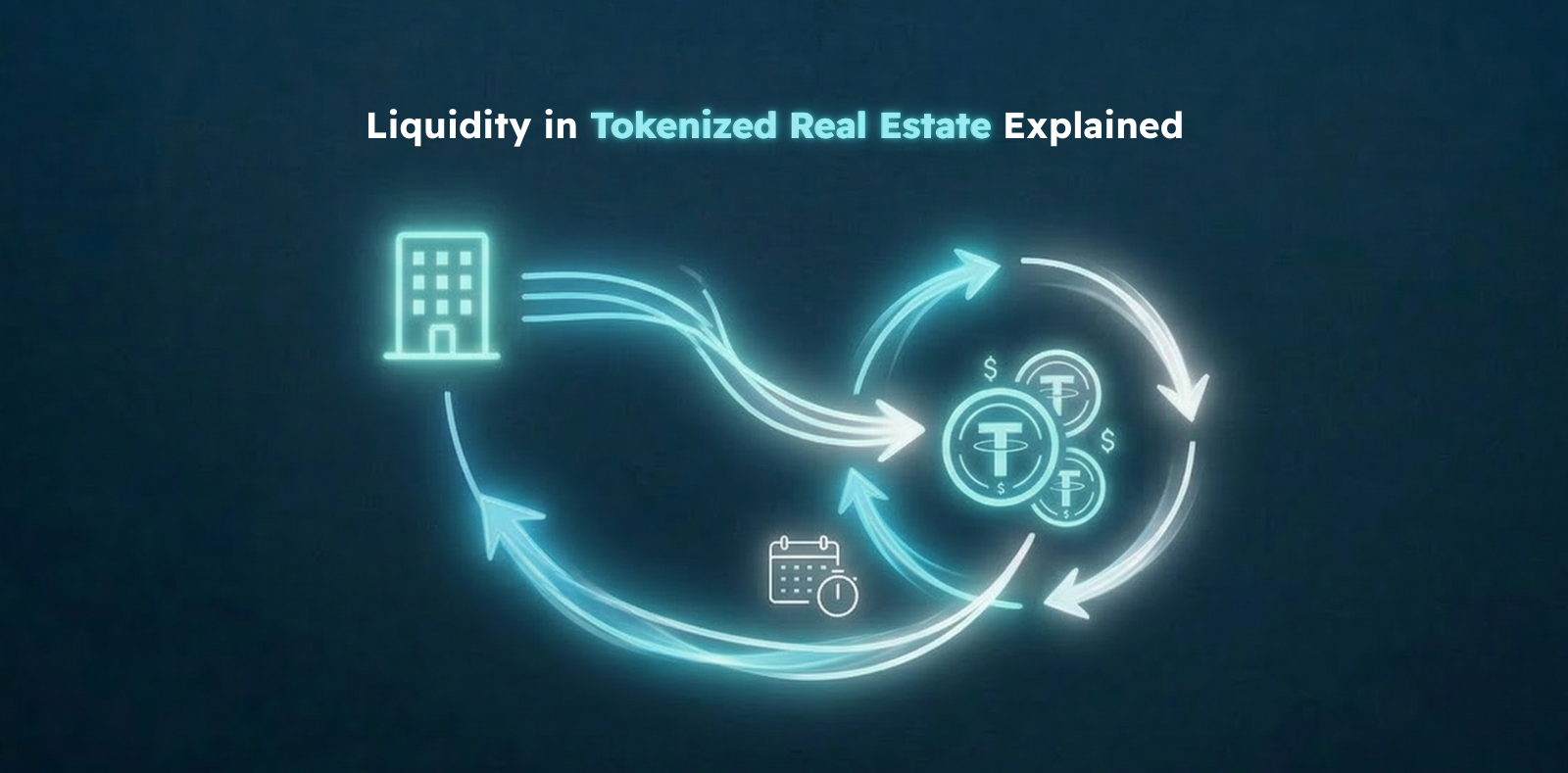
The concept of liquidity in tokenized real estate arises from the idea that property investments can be divided into digital investment units. Instead of needing to sell an entire building to access capital, an investor may be able to sell a portion of their investment.
In theory, this structure allows real estate to behave more like other financial assets. Investors who hold digital investment units linked to property may have the ability to transfer or sell those units through digital platforms. This potential for easier transfers is one of the key factors driving interest in liquidity in tokenized real estate.
However, it is important to understand that tokenization does not instantly transform property into a fully liquid asset. The liquidity of any investment ultimately depends on whether there is an active market of buyers and sellers.
Still, by lowering participation sizes and allowing fractional ownership, tokenization introduces a new level of flexibility that traditional property ownership rarely provides. For investors comparing property investments with other asset classes, this evolving concept of liquidity in tokenized real estate is becoming an important consideration.
How Tokenization Can Improve Property Investment Flexibility
One of the most significant ways tokenization can influence property investing is through improved accessibility. Traditional property investments often require substantial capital, making it difficult for many investors to participate in high-quality assets. Tokenized structures allow real estate investments to be divided into smaller units, making participation more accessible.
This fractional structure contributes to liquidity in tokenized real estate because investors are not required to buy or sell entire properties. Instead, they can hold smaller portions of an asset that represent their share of the investment.
Another advantage is operational simplicity. When investors purchase physical property, they are often responsible for property management, maintenance decisions, tenant relationships, and regulatory compliance. Tokenized real estate investments typically rely on professional asset management teams, allowing investors to focus on financial participation rather than day-to-day operations.
Digital investment platforms also make it easier for investors to track their holdings. Through online dashboards, investors can review asset information, monitor performance, and receive income distributions without the logistical challenges associated with traditional property ownership.
Together, these factors contribute to the evolving concept of liquidity in tokenized real estate, where the investment experience begins to resemble other digital financial assets while still being connected to tangible property value.
The Role of Secondary Markets in Property Token Trading
A key factor influencing liquidity in tokenized real estate is the presence of secondary markets. Secondary markets allow investors to trade existing investment units with other investors after the initial offering has taken place.
In traditional real estate, liquidity is limited because selling a property requires finding a buyer for the entire asset. Secondary markets for tokenized real estate aim to reduce this barrier by allowing investors to transfer or sell smaller units of the investment.
If a tokenized real estate platform supports secondary trading, investors may be able to exit their positions earlier than they would with direct property ownership. This possibility is one of the reasons why liquidity in tokenized real estate has become a topic of increasing interest among investors.
However, secondary market activity depends on several factors. Market participation, regulatory approval, and platform infrastructure all influence whether active trading environments can develop. Without sufficient trading activity, even tokenized investments may remain relatively illiquid.
As tokenized real estate markets continue to evolve, the development of reliable secondary markets will likely play a critical role in determining the practical level of liquidity in tokenized real estate.
Liquidity Limitations: Investors Should Understand
While tokenization introduces potential flexibility, investors should also understand the limitations of liquidity in tokenized real estate. Real estate remains a long-term asset class, and digital investment structures do not eliminate the economic realities associated with property ownership.
First, liquidity ultimately depends on demand. Even if an investor is able to list their tokenized investment units for sale, a buyer must still be willing to purchase them. Market conditions, property performance, and investor sentiment can all influence demand.
Second, regulatory requirements may affect how tokenized investment units can be transferred. Certain jurisdictions require identity verification, investor eligibility checks, or other compliance procedures before transactions can occur.
Third, the maturity of digital trading platforms is still evolving. While some tokenized investment models support secondary trading, many platforms are still developing the infrastructure required to support active markets.
These factors mean that liquidity in tokenized real estate should be viewed as a potential advantage rather than a guaranteed feature. Investors should approach tokenized property opportunities with realistic expectations about how easily they may be able to exit an investment.
How Osool Gamma Provides Access to Real Estate-Backed Investments
Platforms such as Osool Gamma demonstrate how digital investment infrastructure can simplify participation in property markets. For investors exploring liquidity in tokenized real estate, platforms that prioritise transparency and accessibility can provide an easier entry point into real estate-backed opportunities.
If you are exploring liquidity in tokenized real estate but want a simpler way to access property-backed investments, Osool Gamma allows investors to participate in real estate opportunities without buying property directly.
Instead of requiring investors to purchase entire properties, the platform offers structured access to real estate-backed assets through digital investment participation. This approach makes it easier for investors to gain exposure to property markets while relying on professional asset management.
While liquidity in tokenized real estate may vary depending on market conditions and platform infrastructure, digital investment platforms are helping modernise how investors interact with real estate opportunities.
By combining real estate fundamentals with digital accessibility, Osool Gamma reflects how investment platforms are adapting to meet the expectations of today’s investors.
You can start investing now from the Osool Gamma Investment Platform
Liquidity has always been one of the main limitations of traditional real estate investing. Buying and selling property often requires time, legal processes, and significant capital commitments. As digital investment models evolve, tokenization is introducing new ways for investors to access property markets.
The growing discussion around liquidity in tokenized real estate highlights how fractional ownership, digital platforms, and potential secondary markets may improve flexibility for investors. While tokenization does not eliminate the long-term nature of real estate investments, it may offer new ways to participate in property-backed opportunities.
Investors should approach tokenized real estate with balanced expectations. Evaluating asset quality, investment structures, and platform transparency remains essential for making informed decisions.
Ultimately, understanding liquidity in tokenized real estate allows investors to assess whether digital property investments align with their financial goals and investment time horizons.
It is also worth remembering that liquidity should not be the only factor guiding an investment decision. Real estate has traditionally been viewed as a long-term asset, and that underlying principle still applies even when new technology changes how investors access the market. Property performance continues to depend on fundamentals such as location, tenant demand, and the strength of the local economy. Liquidity in tokenized real estate may offer investors more flexibility compared with traditional property ownership, but that does not mean real estate suddenly becomes a short-term trading asset.
Many investors still approach property investments with longer time horizons in mind. In reality, the biggest advantage of tokenization may not be immediate liquidity, but improved access to property opportunities that were previously difficult for smaller investors to reach. By keeping a balanced perspective and focusing on the quality of the underlying asset, investors can benefit from digital investment platforms while still applying the same disciplined thinking that has always guided successful real estate investing.
FAQ
What does liquidity mean in real estate investing?
Liquidity refers to how easily an asset can be converted into cash. Traditional real estate is considered a low-liquidity asset because selling property can take time and involve complex legal processes.
How does liquidity in tokenized real estate differ from traditional property investing?
Liquidity in tokenized real estate may improve flexibility because investments can be divided into smaller units that represent participation in a property asset. These units may be transferred or traded more easily than selling an entire property.
Do tokenized real estate investments guarantee liquidity?
No. Liquidity in tokenized real estate depends on market demand and the availability of trading platforms. Investors should not assume that tokenized investments can always be sold immediately.
Are tokenized real estate investments suitable for long-term investors?
Yes. Even though tokenization may introduce more flexibility, real estate remains a long-term investment. Investors should consider tokenized property opportunities as part of a broader portfolio strategy.
References
World Economic Forum – Tokenization of Real Assets
Deloitte – Digital Asset Investment Reports
PwC – Global Blockchain and Digital Asset Insights
Investopedia – Real Estate Tokenization Explained