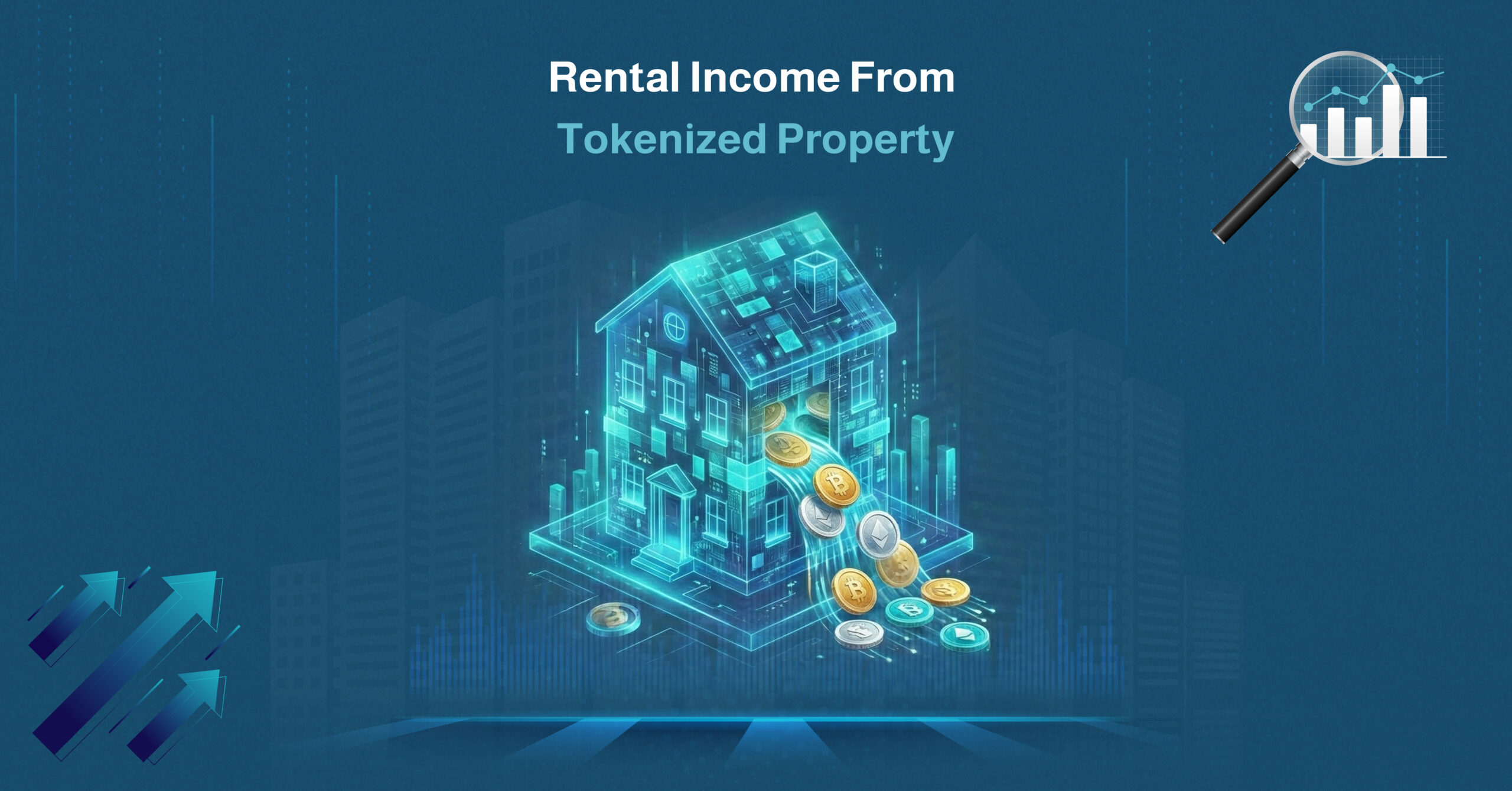
Property investors make their money in two ways: rental and resale. Rental income has always been a major goal for most investors, as it offers the possibility of steady cash flow and long-term growth. Traditional real estate requires the investor to have access to high capital, time, and be a hands-on manager. This is all changing with the introduction of tokenization; real estate is divided into bite-sized pieces or digital tokens. These smaller tokens allow investors to buy into real estate for much less capital and still earn a share of the income.
Rental income from tokenized property refers to the portion of rent collected from a real asset that investors would earn. The distribution of the rent is proportional to the number of tokens an investor holds. The property functions like any other traditional property, but the ownership model is digital and therefore more flexible. This is a way investors can benefit from real estate without getting their hands dirty.
We aim to enlighten you on the process through which income is generated, how it is distributed, what affects the amount they receive, and how platforms like Gamma Assets create structured access to rental-backed returns.
More topics can be read on the Gamma blog
Rental Income From Tokenized Property: How it Works in Practice
Tokenized real estate still relies on the same fundamentals as traditional rental property. A tenant pays rent, the property incurs ongoing costs, and whatever remains becomes the income to distribute. The main differences between tokenized property and traditional rentals are how ownership is represented and how income reaches the investors. The title deed is replaced by digital tokens that represent a fractional share of the underlying asset.
Fractional ownership and income entitlement
Each token reflects a portion of the property’s total value. Investors receive their share of income in proportion to the number of tokens they own. When the tokenized property produces an income, the costs are deducted, and the remaining profit is divvied up among the token holders according to shares. Creating a clear link between the income generated by the real-world asset and the payout an investor receives.
The role of smart contracts
Smart contracts are a great way of reducing time and speeding up paperwork, as it automates many of the administrative steps. Smart contracts record the token ownership, calculate income distribution, and release payouts based on the rules set when the asset was created. Investors don’t need to track tenant payments or reconcile expenses. The system handles these steps and provides documentation for transparency.
What investors experience month to month
Income cycles follow a simple pattern: rent is collected from tenants, operating expenses, management fees, and necessary deductions are applied. Once the net amount is confirmed, the platform allocates payouts to the token holders. Investors receive updates showing the property’s performance, the deductions applied, and the income they earned for that period.
Where Rental Income Comes From in Tokenized Properties
Rental income from tokenized property comes from the same source as traditional property. Where it differs is how the income is pooled, managed, and shared among multiple investors rather than a single owner. Once investors have an understanding of where the money comes from, it will be helpful in setting realistic expectations regarding returns and variability.
Core rental activity
The majority of rental income from tokenized property comes directly from tenant leases. This may include properties such as residential apartments, villas, offices, retail units, or even mixed-use developments. Tenants pay rent according to agreed lease terms, and these payments form the primary source of income for the property. The type of tenant as well as the length of the lease can influence how stable this income is over time.
Additional income streams
Some properties generate supplementary income alongside the standard rent. This could be from parking fees, storage rentals, service charges, or short-term lease premiums. While these amounts are usually smaller than core rent, they can help support overall cash flow, especially in well-managed properties.
How income flows to investors
The tenant will pay rent to the legal entity that holds the property, often seen as a special-purpose vehicle. The rent will have all the additional deductions made, such as maintenance, insurance, property management, and regulatory costs. The remaining income will be divided, according to token amount, among the investors. Creating the rental income from tokenized property that reflects the real financial performance of the asset.
What Affects Rental Income from Tokenized Property
Like any real estate investment, the rental income changes over time. The distribution will rise and fall based on the performance of the property. Investors earning from tokenized property should have a clear understanding of the factors affecting rental income from tokenized property, so they can adjust their expectations accordingly.
Occupancy and tenant stability
Income is determined firstly by whether the property has tenants. When a tenant leaves, distributions may fall or pause until a new lease is secured. Longer leases and reliable tenants will reduce income volatility, while frequency in turnovers will increase the risk of uneven payouts.
Operating and managing costs
The operating costs are deducted before any income is distributed to the investors. The fees usually include maintenance, repairs, insurance, property management, and regulatory fees. Net income can decline if expenses increase or unexpected repairs are needed. Transparent reporting allows investors to see how costs affect returns.
Market and location conditions
Rental demands, local economic activity, and regulations influence both occupancy and rental pricing. Strong markets support stable income, while weaker conditions can pressure cash flow. Inflation and interest rate trends may also affect operating expenses over time.
Transparency and reporting
Clear updates on occupancy, costs, and net income help investors track performance. While transparency doesn’t get rid of risk entirely, it allows investors to access how investors access rental income from tokenized property changes and why those changes might occur.
Rental Income from Tokenized Property vs. Traditional Rentals
Traditional rental investing and tokenized rental investing rely on the same basic idea; the difference lies in the experience. The table below shows how rental income from tokenized property compares with the responsibilities and outcomes of being a direct landlord.
| Category | Rental Income from Tokenized Property | Traditional Rental Property |
| Capital Required | Low entry point. Investors can start with a small amount and still earn a share of rental income from tokenized property. | High upfront cost, including deposit, transfer fees, taxes, and financing. |
| Ownership Structure | Fractional ownership represented by digital tokens. Income is proportional to token quantity. | Full ownership or joint ownership. Income belongs to the landlord. |
| Management Responsibility | None for the investors. Professional property managers handle operations, tenants, and compliance. | Landlords must manage tenants, maintenance, compliance, and service providers unless they hire a manager. |
| Payout Method | Smart contracts automate distribution after rent is collected and expenses are deducted. | Manual or managed payouts, depending on lease agreements and management structure. |
| Income Variability | Fluctuates based on vacancies, costs, and property performance, similar to traditional rentals. | Fluctuates due to the same factors, but the landlord bears the full impact directly. |
| Liquidity | Potential access to secondary market trading for tokens, allowing faster entry or exit. | Low liquidity, selling a property is slow and requires valuation, listing, and transfer processes. |
| Risk Exposure | Risk is spread across many investors, and the impact of costs or vacancies is shared. | The landlord carries full risk of missed rent, repairs, and tenant issues. |
| Cost Transparency | Costs are listed in platform documents, with reporting on operating expenses and deductions. | Costs may be irregular and unpredictable, depending on repairs and tenant turnover. |
| Investors Involvement | Minimal involvement. Suitable for passive investors. | High involvement unless outsourcing management. |
| Regulatory and Compliance Burden | Handled by the platform or SPV, not the investor. | Falls on the property owner. |
| Access to Diversification | Easy to diversify across locations and property types by buying tokens in multiple assets | High cost and operational complexity limits diversification. |
How Gamma Assets Enables Rental Income from Tokenized Property
Gamma Assets provides structured access to real estate through an SPV model that holds each property and manages rent collection, expenses, and distributions. Investors receive clear updates on occupancy, deductions, and net income, which supports informed planning and helps explain changes in rental income from tokenized property. For more details on how the overall model works, see the main Gamma Assets article. This framework lowers barriers, removes operational work, and gives investors a transparent way to participate in income-producing property.
You can start investing now from the Gamma Asset Investment Platform
FAQ
How often is rental income from tokenized property paid out?
Payout schedules vary by property type. Many tokenized real estate projects follow a monthly or quarterly cycle because this lines up with how tenants pay rent and how expenses are reconciled. Once rent is collected and operational costs are deducted, the remaining amount is distributed to token holders according to the number of tokens they own. Some platforms offer more frequent or automated payouts, but the timing always depends on the actual cash flow from the underlying property.
What happens to rental income if a property is vacant?
If a tenant leaves or a property sits empty, rental income from tokenization property will usually drop until a new lease is signed. During vacancy periods, costs such as maintenance or insurance still apply, which can reduce the amount available for distribution. Token holders share in both the income and the risks, so months with lower occupancy may result in smaller or paused payouts.
Is rental income from tokenized property guaranteed?
No. Like traditional real estate, rental income depends on occupancy, market demand, property management, and operating expenses. Platforms aim to choose stable assets and provide clear reporting, but token holders should expect fluctuations based on real conditions rather than fixed or guaranteed returns.