Tokenized real estate is often discussed in terms of access, technology, or innovation. What tends to get far less attention is the structure behind the investment. For investors, this structure is not a technical detail. It determines who owns the property, how income flows, what rights investors hold, and how risks are managed.
A tokenized real estate investment structure brings together traditional property ownership models and digital investment infrastructure. While the format may look new, the underlying mechanics rely heavily on established legal and financial principles. Understanding these mechanics is essential for anyone considering a tokenized property investment.
This article explains the tokenized real estate investment structure in clear, practical terms. It walks through how property is held, how tokens represent participation, how revenue is distributed, and how these structures compare to traditional real estate investments. The aim is to help investors understand what is really happening behind the scenes.
More topics can be read on the Gamma blog
Tokenized Real Estate Investment Structure Explained Simply
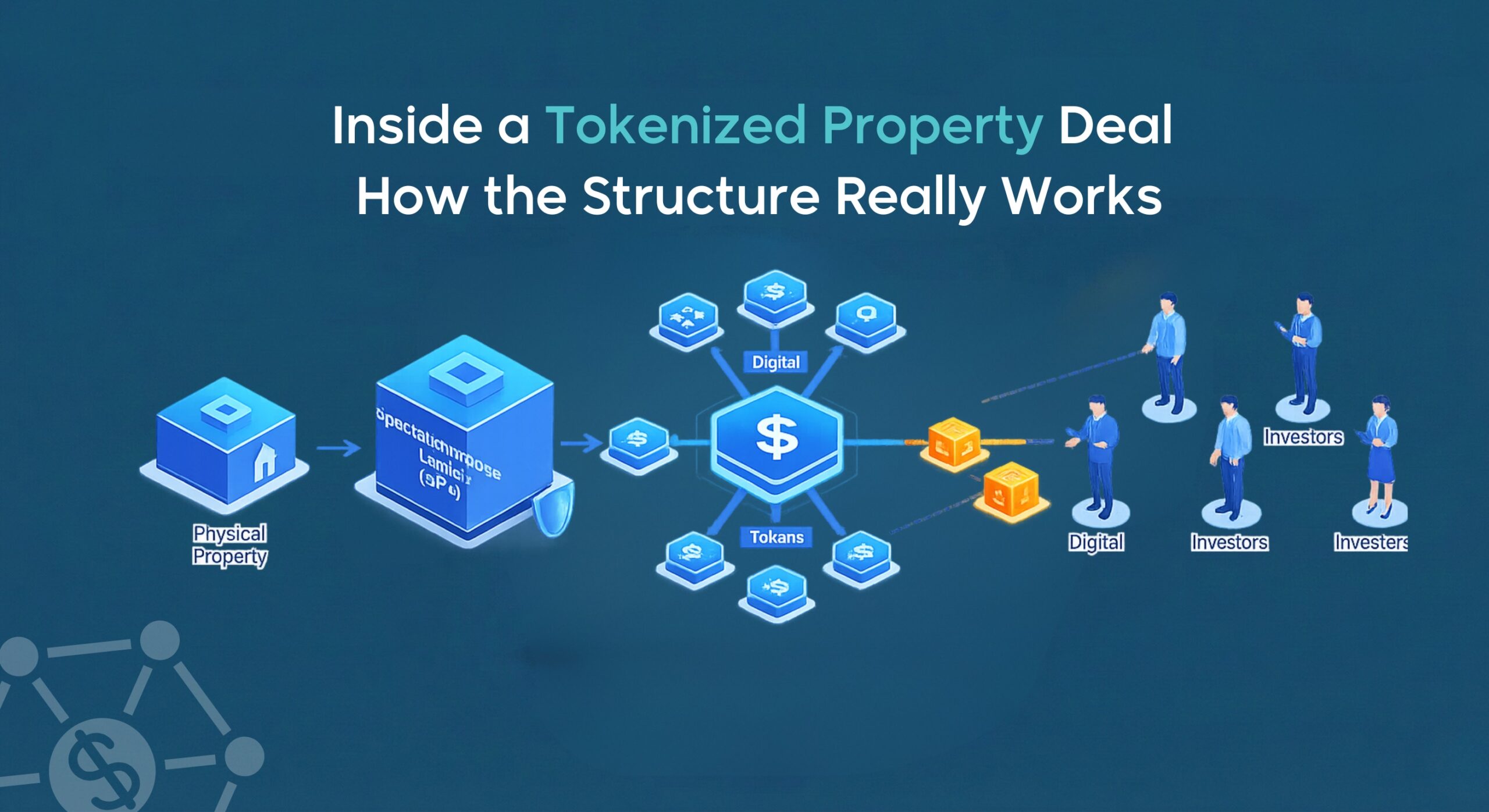
At its core, a tokenized real estate investment structure is a way of organising property ownership and investor participation using digital records. The structure usually begins with a physical property, such as a residential building or commercial asset, that is selected for investment.
Instead of investors purchasing the property directly, the asset is placed into a legal entity. This entity becomes the owner of the property. Investors then acquire tokens that represent an economic interest linked to that entity. These tokens are recorded digitally and allocated to investors according to their contribution.
This layered structure exists for practical reasons. Real estate is complex to divide and manage when there are many investors involved. Legal entities simplify ownership, administration, and compliance. Tokens then provide a way to track participation without changing how the property itself operates.
When the tokenized real estate investment structure is explained simply, it becomes clear that the token is not the asset. The property remains a physical, income-producing asset governed by property law. The token is a representation of participation in the structure that owns or manages that asset.
This approach allows multiple investors to participate in a single property while maintaining clarity around ownership, rights, and obligations. It also enables platforms to manage reporting, income distribution, and transfers in a consistent way.
Legal Entities, Ownership, and Investor Rights
Legal entities play a central role in any tokenized real estate investment structure. Most commonly, a property is held within a special-purpose vehicle or similar entity created solely for that asset. This separation helps isolate risk and define responsibilities clearly.
The legal entity holds the property title. Investors do not own the building directly. Instead, they hold an interest in the entity through their tokens. This distinction is important, as it determines how rights are enforced and how decisions are made.
Investor rights are defined through formal legal agreements. These typically outline entitlement to income, exposure to capital appreciation, and any governance or voting rights. The agreements also specify how disputes are handled and what happens in scenarios such as asset sale or liquidation.
This is where the tokenized real estate investment structure differs significantly from informal fractional ownership models. Rights are not implied or assumed. They are documented and enforceable under applicable laws.
Another important consideration is the separation between the platform and the property entity. In well-designed structures, the platform facilitates access and administration but does not own the property itself. This separation helps protect investor interests if operational issues arise at the platform level.
For investors, understanding how ownership and rights are structured is essential. It clarifies what is being purchased and how protection is built into the investment.
How Tokens Represent Economic Participation
One of the most common points of confusion is what tokens actually represent. In a tokenized real estate investment structure, tokens represent economic participation rather than direct legal ownership of the property.
Economic participation means that tokens entitle holders to a share of the financial outcomes associated with the property. This usually includes rental income and exposure to changes in property value. The exact nature of this participation depends on the legal structure and agreements in place.
It is important to distinguish between legal ownership and economic rights. Legal ownership sits with the entity that holds the property title. Economic rights are distributed to investors through tokens. This separation allows property law and investment law to work together without conflict.
Tokens also serve a practical function. They act as a digital record of who holds which share of the investment. This simplifies administration, reduces manual reconciliation, and improves transparency.
What tokens do not represent is unrestricted control over the asset. Investors cannot independently alter the property, sell it unilaterally, or bypass agreed processes. These limitations are intentional and mirror how traditional property investment vehicles operate.
When the tokenized real estate investment structure is understood in this way, tokens become less mysterious. They are tools for participation and recordkeeping, not replacements for property ownership fundamentals.
Revenue Flow, Costs, and Distributions
Revenue flow is a critical part of evaluating any real estate investment. In a tokenized real estate investment structure, income typically begins with rent collected from tenants occupying the property.
Gross rental income is first used to cover operating costs. These may include property management fees, maintenance expenses, insurance, taxes, and reserves for future repairs. Only after these costs are accounted for does net income become available for distribution.
Distributions are then allocated to investors based on the number of tokens they hold. This proportional approach mirrors traditional property investment vehicles and ensures that income reflects participation level.
The timing of distributions varies by structure. Some platforms distribute income regularly, while others accumulate income over defined periods. These details are outlined in the legal documentation and should be reviewed carefully by investors.
It is also important to understand that income can fluctuate. Vacancy rates, market conditions, and unexpected expenses can affect distributions. Tokenization does not remove these realities. It simply provides a clearer and more efficient way to manage them.
A well-designed tokenized real estate investment structure makes revenue flow transparent. Investors can see how income is generated, what costs are deducted, and how distributions are calculated.
Another important aspect of a tokenized real estate investment structure is how expectations are managed over time. Because these investments are tied to physical property, performance tends to follow real-world conditions rather than short-term market movements. This means investors should expect periods of steady income, occasional fluctuations, and longer holding horizons.
The structure is designed to prioritise sustainability over speed. Decisions around reserves, maintenance, and reinvestment are often built into the framework to protect the underlying asset. While this can reduce short-term distributions, it supports long-term asset value and income stability.
Understanding this balance is essential when evaluating a tokenized real estate investment structure. Investors are not simply purchasing a digital instrument, but participating in a managed property investment. The structure exists to align investor outcomes with the realities of owning and operating real estate, rather than abstracting those realities away.
Tokenized Real Estate Investment Structure on Osool Gamma
Osool Gamma applies the tokenized real estate investment structure in a way that prioritises clarity, legal alignment, and investor understanding. Properties are held within defined legal entities, and tokens represent clearly documented economic interests linked to those assets.
The platform uses tokenization as an administrative and access tool rather than a speculative feature. Tokens are used to record participation, manage distributions, and support transparency, while property fundamentals remain central.
Legal documentation outlines ownership structure, investor rights, and revenue mechanics before investment takes place. This ensures that investors understand how the structure works and what their participation entails.
By focusing on structure rather than novelty, Osool Gamma reflects a more mature approach to tokenized real estate. The emphasis is on making complex property investments easier to understand and manage, without altering the underlying nature of real estate investing.
You can start investing now from the Osool Gamma Investment Platform
A tokenized real estate investment structure is not about replacing traditional property investing. It is about organising it in a way that improves access, clarity, and efficiency.
By combining established legal entities with digital recordkeeping, tokenization allows investors to participate in real estate with greater transparency and defined rights. Understanding how ownership, tokens, and revenue flow work together is essential before committing capital.
For investors who take the time to understand the structure, tokenized real estate can offer a clear and credible way to engage with property markets through modern investment frameworks.
Frequently Asked Questions
What do investors actually own in a tokenized property deal?
In a tokenized real estate investment structure, investors do not usually own the property directly. Instead, they hold tokens that represent an economic interest in the legal entity that owns the property. This structure allows multiple investors to participate while keeping ownership and management clearly defined.
How is income distributed to token holders?
Income is typically generated from rent collected at the property level. After operating costs, fees, and reserves are deducted, net income is distributed to investors based on the number of tokens they hold. Distribution schedules and methods are defined upfront in the legal documentation.
Is a tokenized structure riskier than traditional property investing?
Tokenization does not remove real estate risk, nor does it inherently increase it. Property performance, market conditions, and management quality still apply. The key difference is that the tokenized real estate investment structure introduces additional considerations for platform operations and governance that investors should assess alongside property fundamentals.
From a structural perspective, tokenized real estate investments are designed to mirror established property models rather than replace them. This familiarity helps investors assess opportunities using principles they already understand, while benefiting from improved access and administration through digital infrastructure.