Tokenized real estate has become a serious topic of discussion among investors in recent years. What was once viewed as a niche concept linked mainly to blockchain experimentation is now increasingly discussed alongside traditional property investments. As tokenized offerings mature, the conversation has shifted away from novelty and toward fundamentals.
For investors in 2026, the central question is no longer whether tokenization is innovative, but whether the balance between risk and reward makes sense. Like any investment linked to property, tokenized real estate carries both opportunity and exposure. Understanding where returns come from, what risks exist, and how those elements interact is essential for making informed decisions.
This article explores tokenized real estate risks and returns in practical terms. It explains how returns are generated, outlines the key risks investors must consider, and looks at how expectations can be balanced realistically in today’s market.
More topics can be read on the Gamma blog
Tokenized Real Estate Risks and Returns Explained
When discussing tokenized real estate risks and returns, it is important to start with a clear definition. Tokenized real estate refers to investment structures where economic participation in property is represented digitally, typically through tokens linked to a legal entity that owns or manages the asset.
From a return perspective, tokenized real estate follows the same fundamental drivers as traditional property. Income is generated through rent, and value may increase or decrease based on market conditions, asset quality, and management decisions. Tokenization does not create new sources of return. It changes how investors access and participate in those returns.
Risk operates similarly. Property risk, market risk, and operational risk all remain present. What tokenization introduces is an additional structural layer, which can either clarify or complicate risk depending on how it is designed.
In 2026, tokenized real estate risks and returns are more closely aligned with traditional property investment than they were in earlier years. Early models often blurred the line between asset-backed investing and speculative digital assets. Today, more mature structures make a clearer distinction between property performance and platform mechanics.
For investors, the key takeaway is that tokenization does not redefine the risk-return equation. It reframes it. Understanding how the structure works is just as important as understanding the underlying asset.
Where Returns Typically Come From
Returns in tokenized real estate investments are generally derived from two main sources: income and value appreciation. These sources mirror traditional property investing, even though the investment format is digital.
Rental income is the most common driver of ongoing returns. Properties generate rent from tenants, which is collected at the asset level. After expenses such as maintenance, management fees, insurance, and reserves are accounted for, net income may be distributed to investors based on their participation.
Capital appreciation is the second potential source of return. If a property increases in value over time due to market conditions, improvements, or repositioning, investors may benefit when the asset is sold or revalued. Tokenized structures typically reflect these changes through updated valuations rather than daily price movements.
It is important to note that tokenized real estate risks and returns are not enhanced simply because an investment is tokenized. Tokenization can improve efficiency and access, but it does not guarantee higher yields. In some cases, returns may be more modest than expected, particularly in stable or regulated markets.
In 2026, many platforms emphasise realistic return projections rather than aggressive forecasts. This shift reflects a broader understanding that sustainable property returns tend to be steady rather than explosive.
Investors should evaluate returns using the same principles they would apply to any property investment: location, asset quality, tenant demand, and management capability.
Key Risks Investors Must Understand
Understanding risk is essential when assessing tokenized real estate risks and returns. While some risks are familiar to property investors, others are specific to the structure and platform used.
Asset risk remains the most fundamental. Property values can decline, tenants can leave, and maintenance costs can rise. Tokenization does not insulate investors from these outcomes. Market conditions in 2026 continue to vary by region and asset type, making due diligence essential.
Structural risk is another consideration. Tokenized investments rely on legal entities and contracts to define ownership and rights. If these structures are poorly designed or unclear, investors may face uncertainty around enforcement or decision-making.
Platform risk is more specific to tokenized models. Investors must consider how a platform operates, how assets are held, and what happens if the platform encounters financial or operational difficulties. In mature 2026 models, asset segregation and governance frameworks help mitigate this risk, but it cannot be ignored.
Liquidity risk is also important. Tokenized real estate is not the same as publicly traded securities. Exit options may be limited, and holding periods can be longer than expected. Investors who require flexibility should factor this into their decisions.
Taken together, these risks shape how tokenized real estate risks and returns should be evaluated. The presence of multiple risk layers makes transparency and structure critical.
Balancing Risk and Return Expectations
One of the most common challenges for investors is aligning expectations with reality. Tokenized real estate can appear attractive due to its digital format and perceived accessibility, but it is still governed by property fundamentals.
Balancing tokenized real estate risks and returns requires an understanding of the time horizon. Property investments are typically medium- to long-term in nature. Short-term volatility may be limited, but returns also tend to accumulate gradually.
Yield expectations should also be realistic. While income distributions can provide steady returns, they are influenced by expenses, vacancies, and broader market trends. Investors should be cautious of projections that appear disconnected from asset fundamentals.
Another important aspect is diversification. Tokenized real estate can play a role within a broader portfolio, but it should not be viewed as a standalone solution. Combining different asset types and risk profiles helps manage exposure more effectively.
In 2026, informed investors are increasingly comfortable with moderate returns that are clearly explained and supported by asset performance. This shift reflects a move away from speculative thinking toward disciplined investing.
Balancing risk and return is less about chasing upside and more about understanding trade-offs.
Making Informed Trade-Offs
Every investment decision involves trade-offs, and tokenized real estate is no exception. Understanding these trade-offs helps investors decide whether the structure fits their goals.
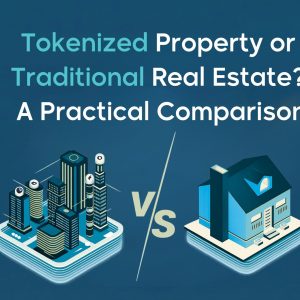
Compared to traditional property ownership, tokenized real estate may offer lower entry costs and reduced operational involvement. Investors do not need to manage tenants or maintenance directly. However, this convenience comes with reliance on a platform and predefined governance processes.
Compared to purely digital assets, tokenized real estate offers tangible backing and clearer valuation references. At the same time, it lacks the liquidity and price responsiveness of some digital markets.
In 2026, tokenized real estate risks and returns are best understood in context. The structure can improve access and transparency, but it does not eliminate risk or guarantee performance. Investors gain efficiency and diversification, but they give up some control and flexibility.
Making informed trade-offs means recognising these dynamics rather than assuming tokenization automatically improves outcomes. The most successful investors are those who align investment structures with their own risk tolerance, time horizon, and return expectations.
How Osool Gamma approaches tokenized real estate risks and returns
Osool Gamma reflects how tokenized real estate risks and returns are approached by more mature platforms in 2026. Rather than positioning tokenization as a shortcut to higher returns, the platform applies it as a structural tool designed to improve clarity, access, and investor understanding.
Properties are held within clearly defined legal entities, and tokens represent documented economic participation rather than informal claims. This helps align digital records with enforceable legal rights, reducing ambiguity around ownership and income entitlement. From a risk perspective, this structure ensures that property risk, operational risk, and platform risk are addressed separately rather than blurred together.
Osool Gamma also emphasises transparency around returns. Income expectations are framed around actual property performance, taking into account operating costs, reserves, and market conditions. This approach avoids overstating yields and helps investors assess tokenized real estate risks and returns realistically.
By focusing on governance, asset segregation, and clear reporting, Osool Gamma demonstrates how tokenization in 2026 is less about novelty and more about a disciplined investment structure. The goal is not to remove risk, but to make it visible, understandable, and proportionate to expected returns.
You can start investing now from the Osool Gamma Investment Platform
Tokenized real estate has matured significantly by 2026, but its risk and return profile remains rooted in property fundamentals. Understanding tokenized real estate risks and returns requires looking beyond the digital format and focusing on asset performance, structure, and governance.
For investors willing to assess these factors realistically, tokenized real estate can offer a structured way to participate in property markets. The key is not avoiding risk altogether, but understanding where it comes from and how it is managed.
As with any investment, clarity and discipline matter more than novelty.
Frequently Asked Questions
Are tokenized real estate returns higher than traditional property returns?
Not necessarily. Tokenized real estate risks and returns are driven by the same fundamentals as traditional property investing. Rental income, expenses, and market conditions determine outcomes. Tokenization can improve access and efficiency, but it does not automatically increase returns. In many cases, returns are comparable to traditional property investments with similar risk profiles.
What is the biggest risk investors overlook?
One commonly overlooked risk is liquidity. Tokenized real estate is still tied to physical property, which is not instantly tradable. Exit options may be limited, and holding periods can be longer than expected. Investors should assess whether the investment timeline aligns with their financial needs before committing capital.
How should investors evaluate risk versus reward?
Investors should assess tokenized real estate risks and returns by looking at the underlying property, the legal structure, and the platform’s governance. Understanding how income is generated, how costs are managed, and how decisions are made helps investors determine whether the expected return justifies the risk involved.